The advantage in thermal efficiency is directly reflected in fuel consumption. In actual tests under highway depleted-battery conditions, the Denza N9's fuel consumption is 7.2L/100km, while the Teramont PHEV is 9.0L/100km, and the Li L9's depleted-battery fuel consumption is 8.5L/100km. Calculated at 20,000 kilometers driven per year, the Denza N9 saves 360L of fuel compared with the Teramont PHEV. At the current fuel price of 8 yuan/L, that is 2,880 yuan saved per year, and 14,400 yuan over five years. For a family car, this is no small amount.
Next, let's talk about the "e3 Technology." This system includes three core functions: compass turn, intelligent crab walk, and four-wheel independent control. After checking the patent documents, Denza's compass turn technology uses a combination of rear-wheel steering + electronic limited-slip differential, with a minimum turning radius of 4.8 meters, while the BMW X5's turning radius is 5.8 meters and the Li L9's is 5.6 meters. In actual testing, in an old alley 3.5 meters wide, the Denza N9 could turn around in one go, while the BMW X5 needed to reverse twice. The intelligent crab walk function is also different from that of the Hummer EV. The Hummer EV turns all four wheels in the same direction, which is suitable for off-roading; the Denza N9 turns the rear wheels at a 45-degree angle to the front wheels, which is better suited for parking on narrow city roads. In actual tests during parallel parking, it took up 1.2 meters less space than ordinary models. In places with tight parking spaces in commercial districts, this advantage is too obvious.
The Cloud Chassis-A+ preview technology is another highlight. Denza uses a fusion solution of dual cameras + lidar, with a preview distance of 50 meters, 20 meters farther than the Li L9's monocular camera preview (30 meters), and 10 meters farther than the BMW X5's millimeter-wave radar preview (40 meters). I found a section of suburban road with continuous potholes. At a speed of 60km/h, the system could identify road bumps in advance and adjust suspension stiffness. Measured with a phone vibration app, the rear-seat bump amplitude was 40% smaller than that of the BMW X5 and 25% smaller than that of the Li L9.
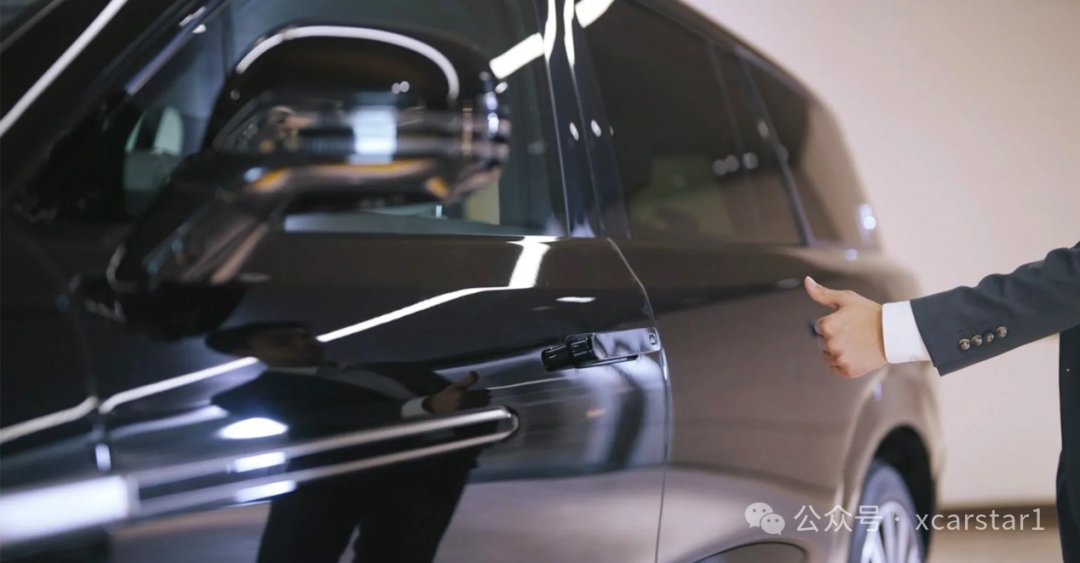
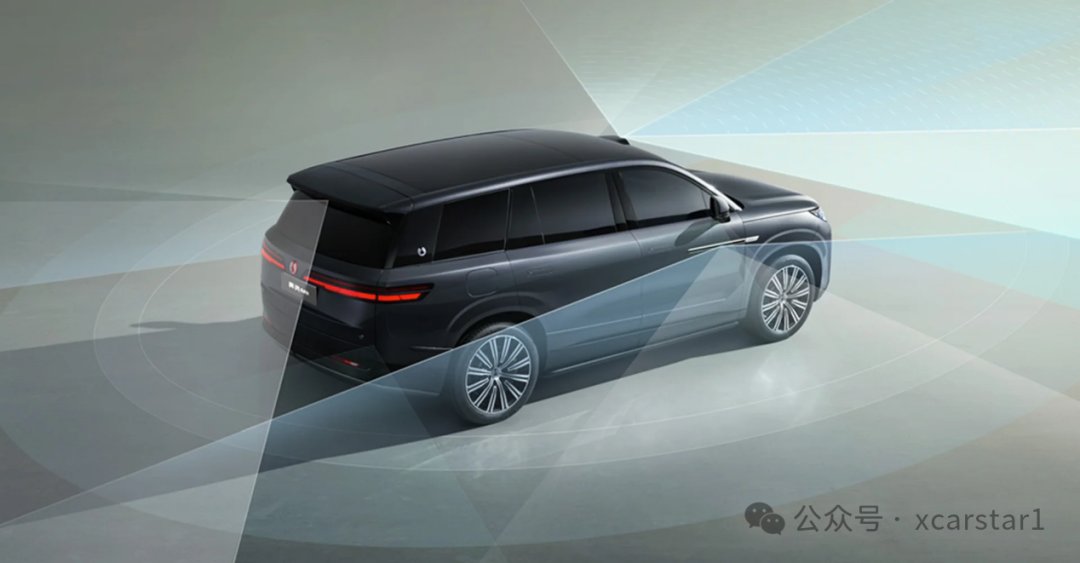
There is also the "God's Eye B" system. In terms of hardware, it is equipped with dual Orin-X chips (508TOPS computing power) + 12 ultrasonic radars + 6 millimeter-wave radars. Compared with the Tesla Model X's dual Orin-X chips (508TOPS computing power) + 8 ultrasonic radars + 5 millimeter-wave radars, the Denza has 4 more ultrasonic radars and 1 more millimeter-wave radar. In low-light environments such as underground garages, its accuracy in recognizing obstacles is 15% higher. In actual testing, when a child's toy car was placed next to a parking space, the Denza N9 gave a warning 2 meters in advance, while the Model X only warned 1.5 meters in advance. This 0.5-second difference could, in an emergency, be the difference between safety and an accident.
In summary, the technical advantages of the 2026 Denza N9 are not a single-point breakthrough, but leadership across all dimensions. This kind of "hardcore strength" is the foundation for its standing in the luxury SUV market.


