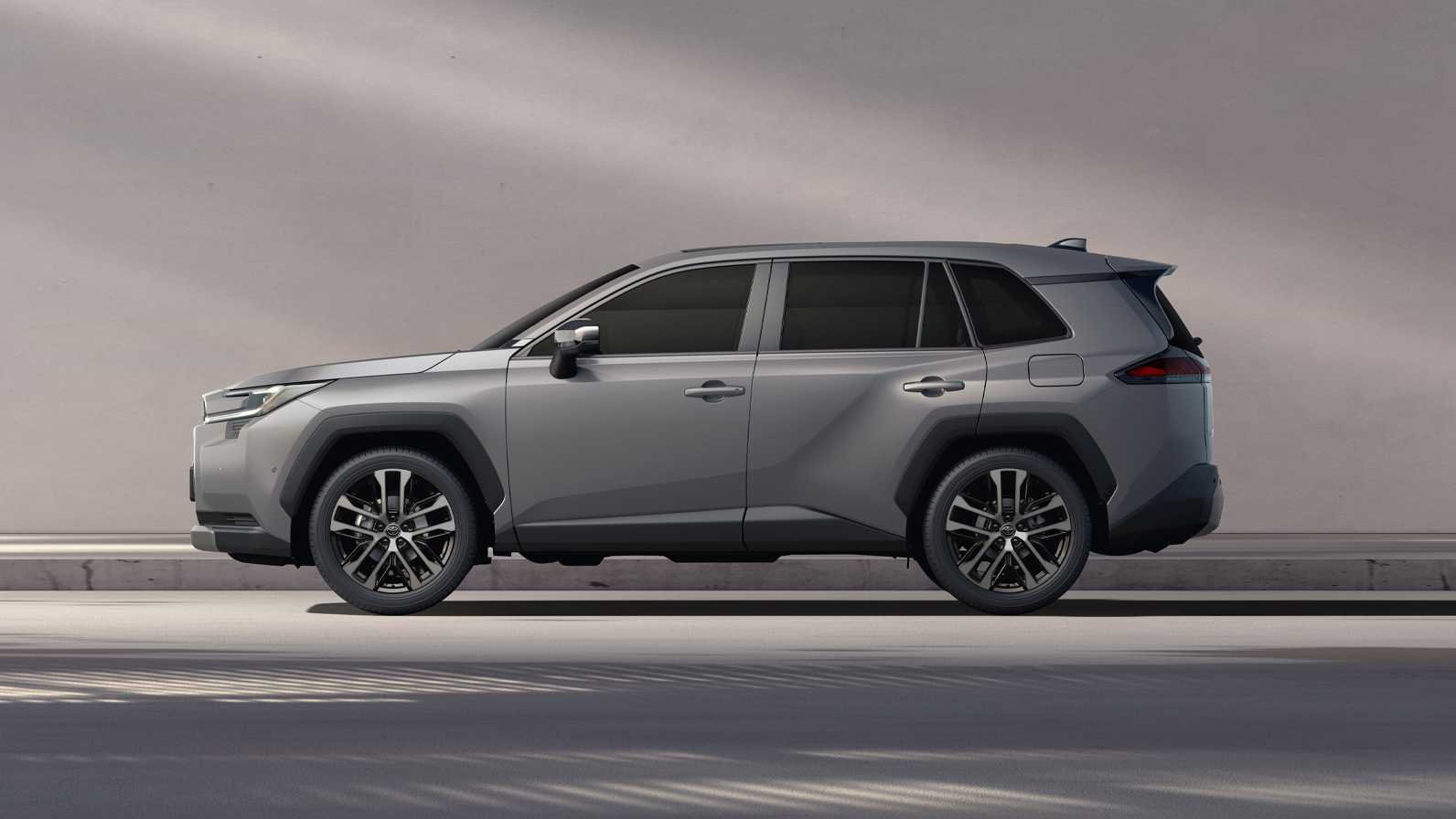
If viewed from the perspective of an "engineering project retrospective," the all-new RAV4 Rongfang feels more like a goal-oriented mid-cycle refresh: without overturning the platform, it concentrates resources on strengthening three directions—perception, interaction, and energy efficiency.
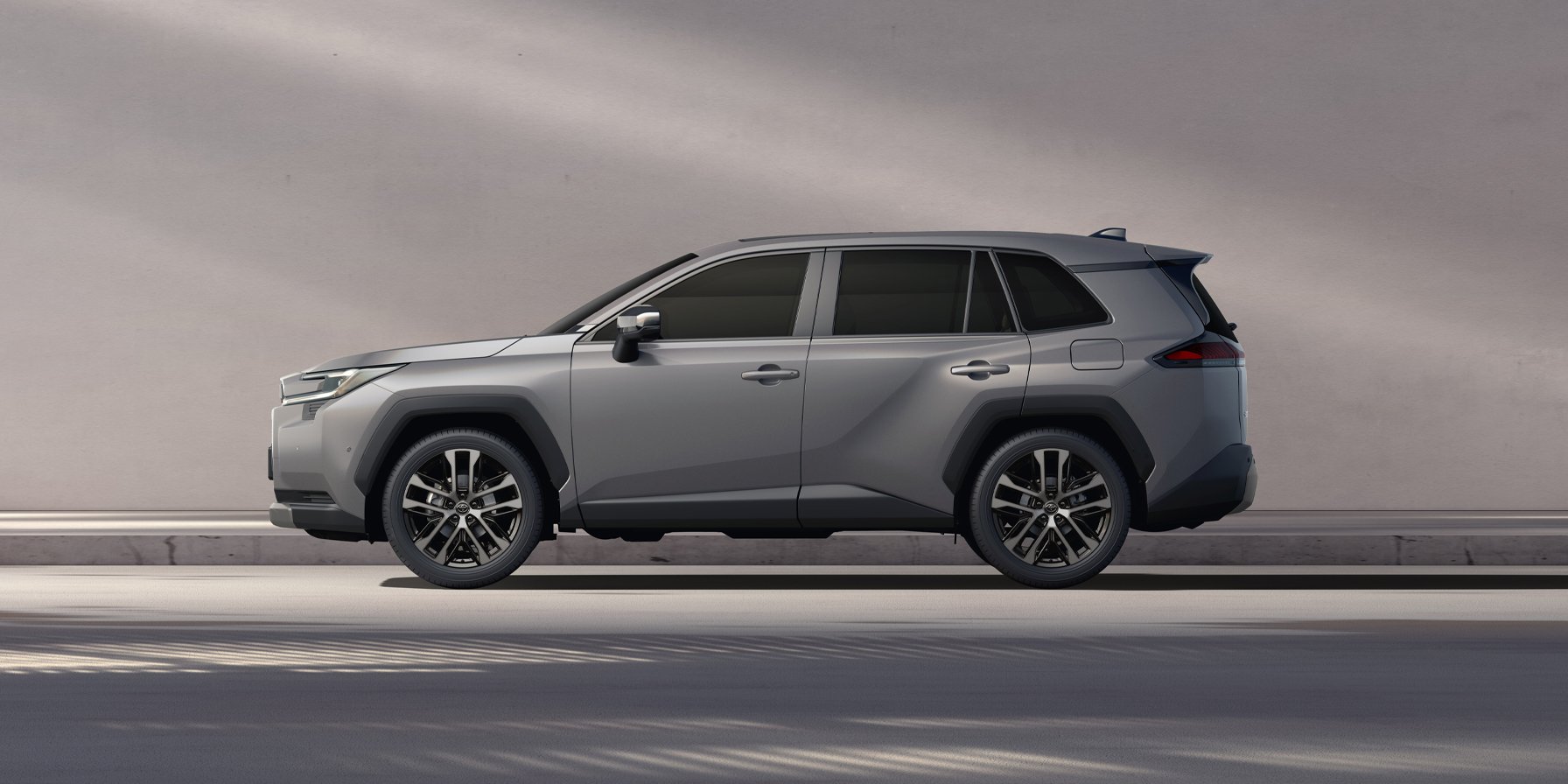
I. Overall Vehicle Dimensions and Packaging: Optimization of a Typical Compact Transverse Platform
Body dimensions are:
Length/Width/Height: 4620/1855/1680mm
Wheelbase: 2690mm
This set of figures is very standard:
The wheelbase-to-length ratio is approximately 0.58, indicating that the vehicle is still primarily set up for urban roads and family use, balancing maneuverability and interior space.
The 1855mm body width is slightly wider than average in its class, which is positive for cornering stability and roll control, and beneficial for later chassis calibration.
From the side profile, the front and rear overhangs have not been noticeably lengthened, indicating that the engineering team did not resort to "brute-force stretching" to pile on space, but instead maintained the packaging logic of the existing platform—this is friendly to development costs, reliability validation, and production tempo.
II. Exterior Structure: Styling Engineering Focused on "Perception Upgrades"
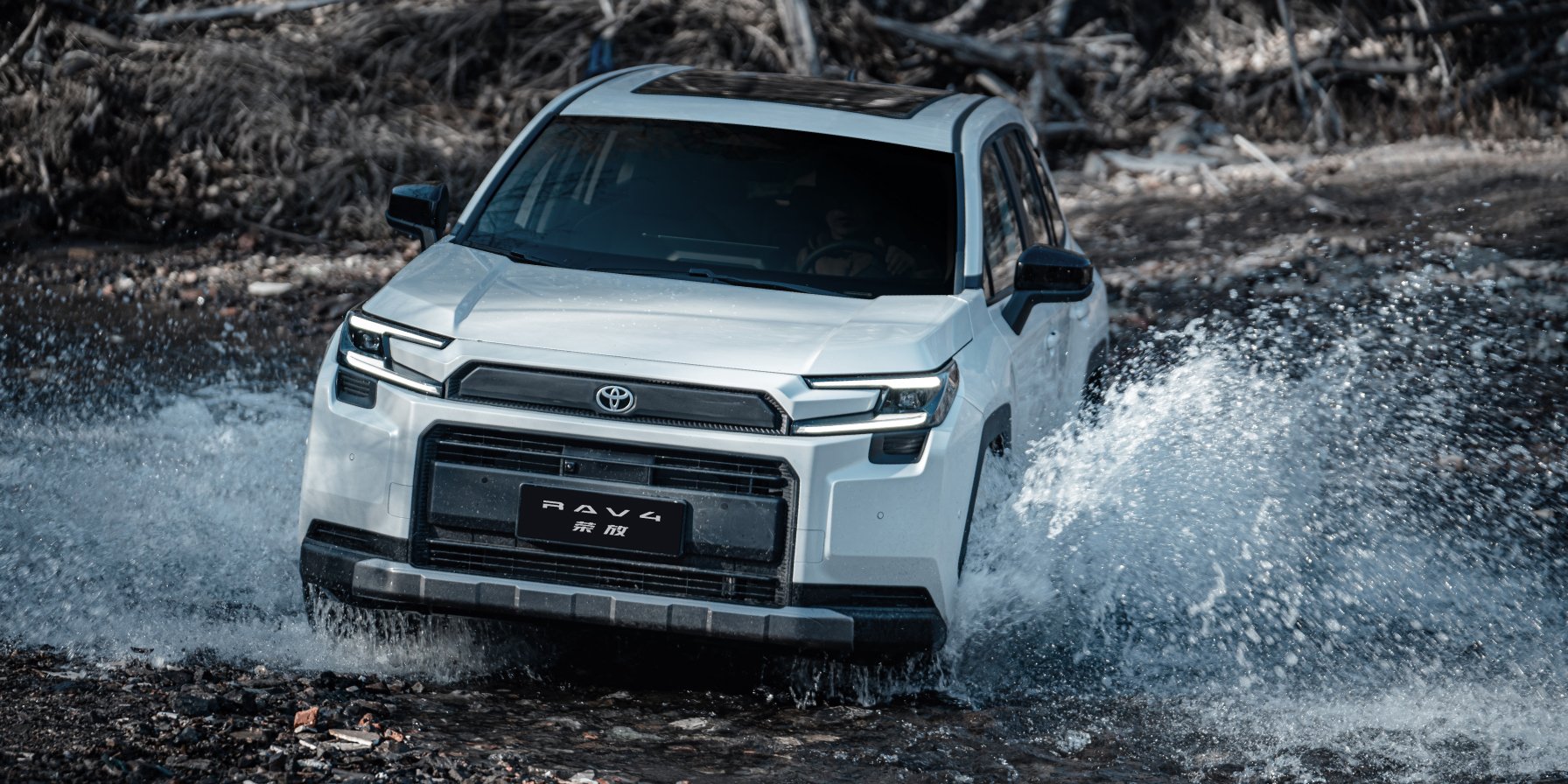
1. Front Fascia Structure
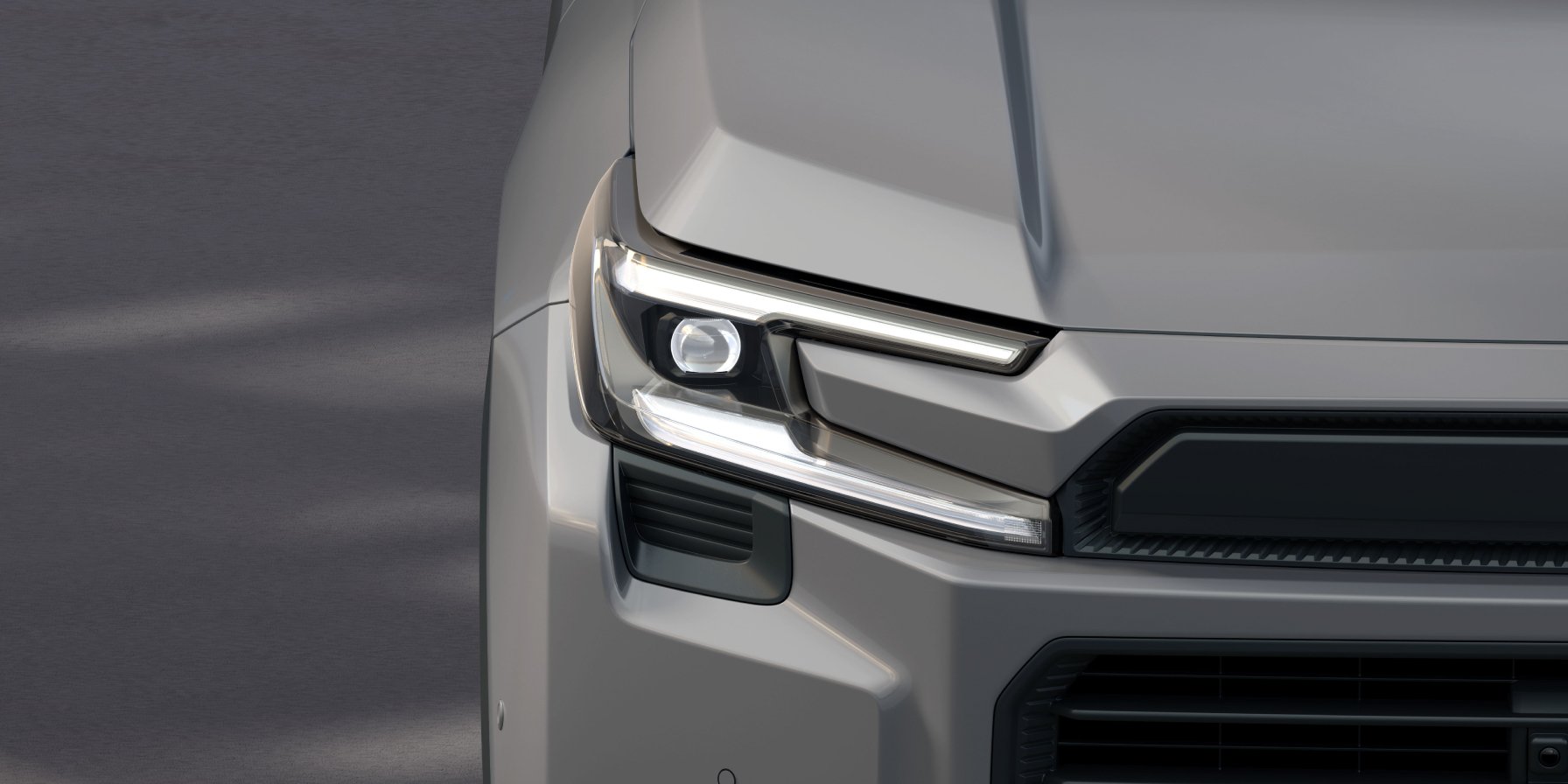
C-shaped light clusters + a central black trim strip running through, which from an engineering standpoint means the internal light sources, light guides, and wiring layout within the lamp body are more complex, but the benefits are:
Daytime running lights/position lights have greatly improved recognition;
A "visual through-effect" is achieved via the trim strip, without needing a true through-type light bar, controlling cost and failure risk.
Borderless mesh grille + lower through-type black slats:
The upper grille is mainly responsible for brand recognition and radar/camera placement, while the lower grille is the primary air intake channel;
The through-type styling helps reserve sufficient heat exchange cross-sectional area in the grille area, accommodating the cooling needs of the 2.5 hybrid system.
2. Side Body and Roof
Clear character lines with black wheel arches, window frames, and roof:
The black wheel arch cladding is a replaceable component from an engineering standpoint—during off-road or urban minor impacts, there is no need to repaint and repair the entire panel, reducing repair costs;
The black roof + black D-pillar create a "floating roof" effect, but structurally it remains a conventional steel roof, with no negative impact on body rigidity.
From this section, it can be seen that the design team made a compromise between "visual off-road feel" and "engineering feasibility"—using trim pieces and color schemes to create atmosphere, rather than undertaking large-scale structural reconstruction.
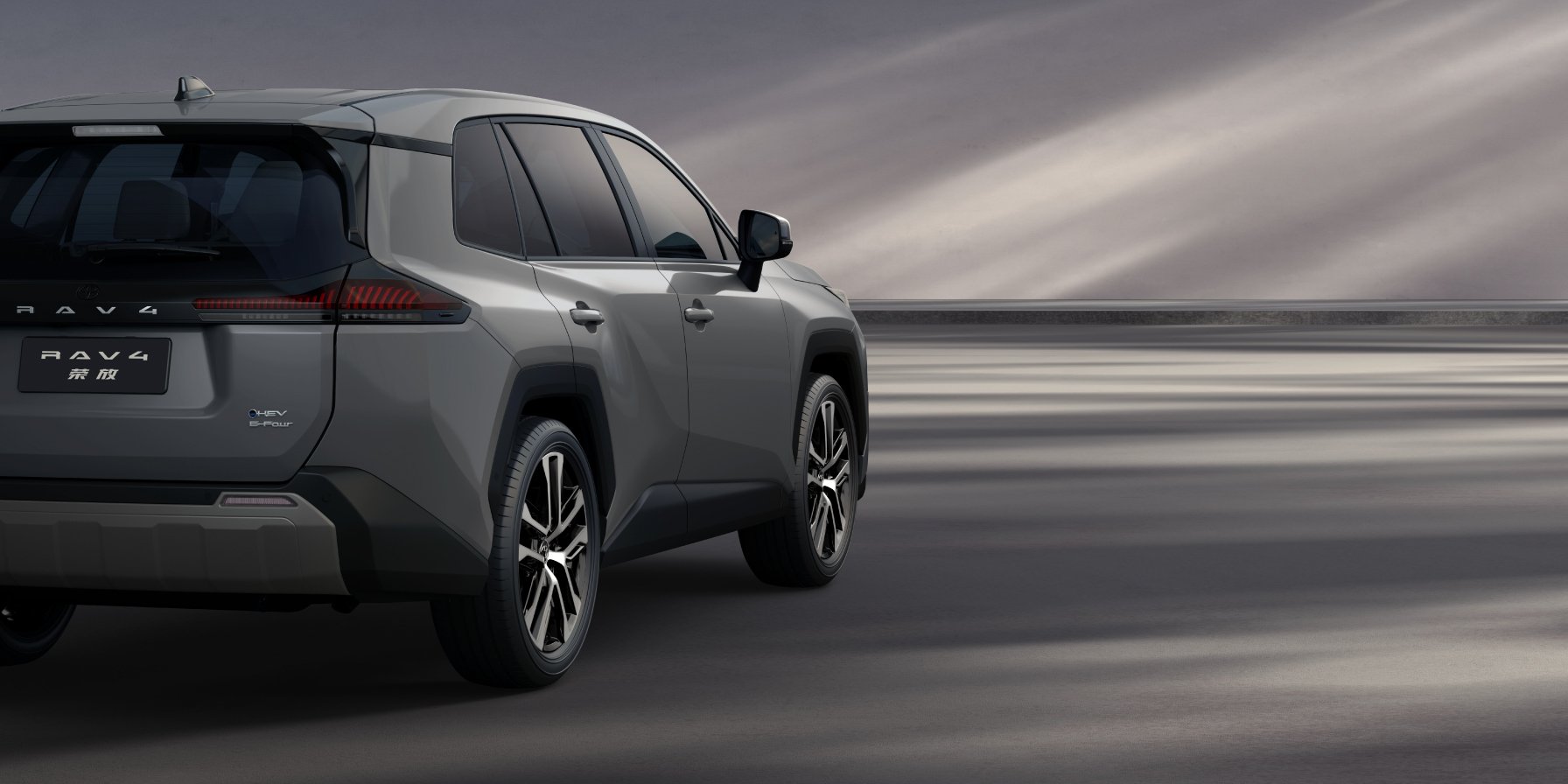
III. Rear and Lighting: Balancing Recognition and Manufacturing Complexity
The taillights use vertical bar-shaped light sources, with a central black trim panel creating a visual through-effect:
Advantages:
The central black trim panel avoids the additional cost and potential water ingress and poor contact issues of a large through-type light bar;
When the vertical light strips illuminate, their height is close to the driver's eye level, providing better recognition for following vehicles, especially in rain and fog.
The rear bumper styling is relatively simple:
More friendly to assembly tolerances and post-scratch repairs;
It forms a partition with the front bumper similar to "refined upper section, high-strength plastic lower section," which is a typical "cost-controllable + durability-first" solution in engineering.
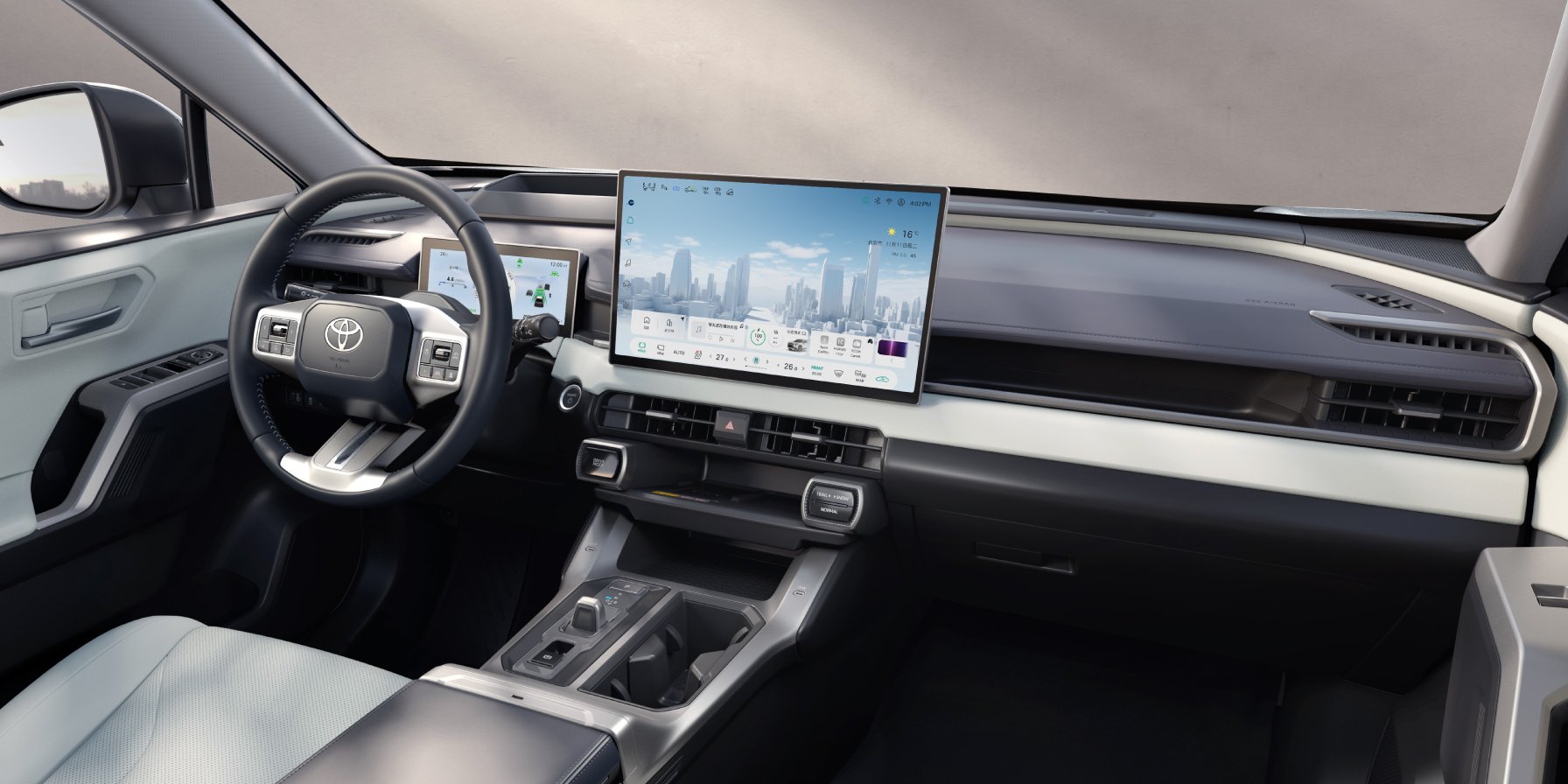
IV. Cabin Electronics and Electrical: Moving from "Usable" to "Maintainable and Powerful Enough"
1. Three-Screen Architecture and Chip
Full LCD instrument cluster + 15.6-inch central control screen + HUD head-up display
Equipped with SA8155P cockpit chip
From an engineering perspective, there are several key points:
Computing Power and Load
SA8155P is currently a mainstream level among automotive-grade cockpit chips, fully capable of supporting UI rendering for three screens, voice, online services, etc., while reserving a certain margin for OTA and future feature expansion.
Division of Labor Among Three Screens
The instrument cluster handles key driving information (speed, operating conditions, energy flow)
The HUD handles "eyes-on-road" prompts
The central control screen handles navigation, multimedia, and vehicle settings
This division of labor reduces the cognitive load of stacking information on a single interface, making it more driver-friendly during long drives.
Maintenance and Upgrades
A centralized computing platform + multi-screen partitioned display is currently one of the architectures most amenable to software upgrades and fault diagnosis—when issues arise, they can be located through software partitions without needing a "full vehicle teardown."
2. Interior Lighting and Ambiance
256-color ambient lighting from an engineering standpoint means increased multi-channel LED drivers + CAN/LIN control nodes
But Toyota typically ensures redundancy and protection at the power supply and wiring level, so such features have limited impact on overall vehicle failure rates
For users, this is a configuration upgrade with clearly improved "perceived value" and relatively controllable actual risk.
V. Intelligent Driving: The Hardware Iteration Logic of TSS 4.0
The new vehicle is equipped with the TSS 4.0 driver assistance system, with features including:
Adaptive Cruise Control (ACC)
Lane Keeping (LKA/LTR) and other mainstream L2 functions
From an engineering perspective, it can be roughly inferred that:
Sensor Layout
The camera above the front windshield is used for lane line, lead vehicle, and pedestrian recognition;
The millimeter-wave radar in the front grille or logo area is responsible for longitudinal distance measurement;
Ultrasonic radar/short-range radar may be placed on the sides/rear for low-speed parking and blind spot detection.
Control Strategy
Toyota is known for being "steady and conservative," and TSS 4.0 very likely still prioritizes comfort and safety,
It will not pursue aggressive automatic lane changing/large-scale autonomous driving experiences, but rather make basic ACC + lane keeping smoother and more predictable.
Engineering Significance
For users, this system is more suitable for daily use on highways/ring roads, rather than being a selling point for "city NOA flexing muscles."
For the engineering team, this strategy reduces the number of algorithm boundary conditions, helping to make controllable scenarios extremely stable.
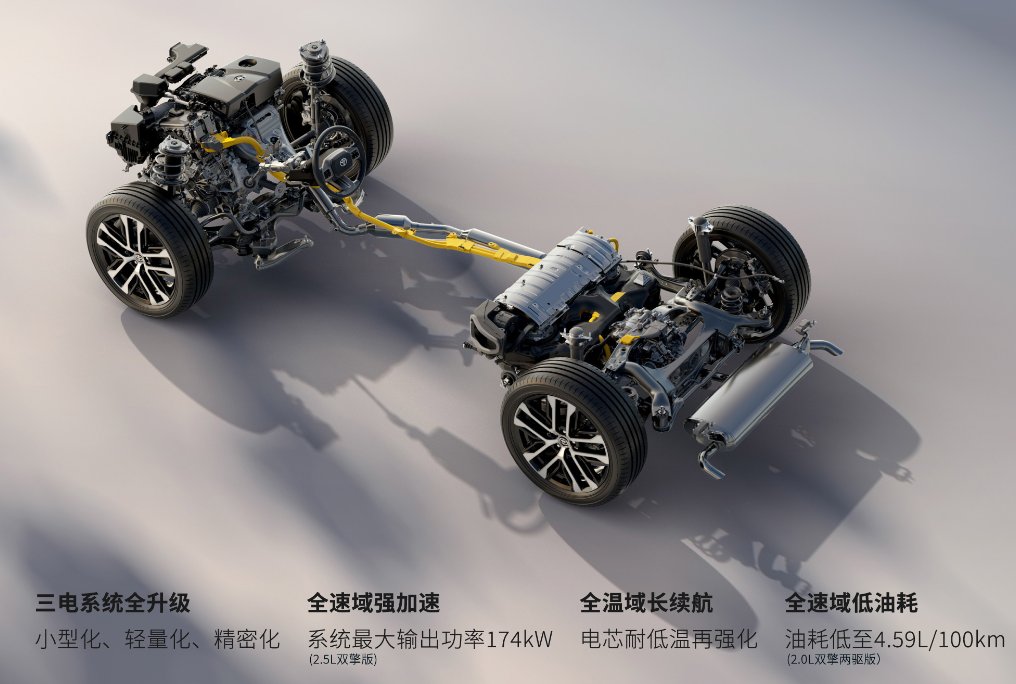
VI. Powertrain: Architectural Trade-offs Under Multi-Powertrain Parallel Strategy
The new vehicle offers three powertrains:
2.0L naturally aspirated engine
Maximum power: 126kW
Typically paired with a CVT transmission
Engineering advantages: mature structure, clear thermal management logic, low maintenance cost, suitable as the "reliable baseline" for entry-level volume-selling trims.
2.0L hybrid system
Engine maximum power 112kW
Motor and planetary gear E-CVT work in coordination (inferred based on Toyota's consistent approach)
Priority goal is energy consumption optimization:
By utilizing the optimal BSFC region across multiple operating conditions, reducing combined fuel consumption;
Advantages are obvious under frequent stop-start and urban congestion conditions.
2.5L hybrid + E-FOUR electronically controlled AWD
Engine maximum power 136kW
The rear axle is driven by a motor, with no traditional driveshaft
Engineering advantages:
Compact structure, more freedom in longitudinal layout;
Faster rear axle torque distribution response, capable of dynamic intervention on demand, suitable for slippery/light off-road scenarios;
Avoids the complex transmission mechanisms of mechanical AWD—reducing weight and lowering NVH sources.
Overall, this is a powertrain layout of "energy efficiency first, moderate performance":
Using multiple displacements + single/dual motor combinations to correspond to different user demand gradients, rather than forcibly cramming all performance into one assembly.
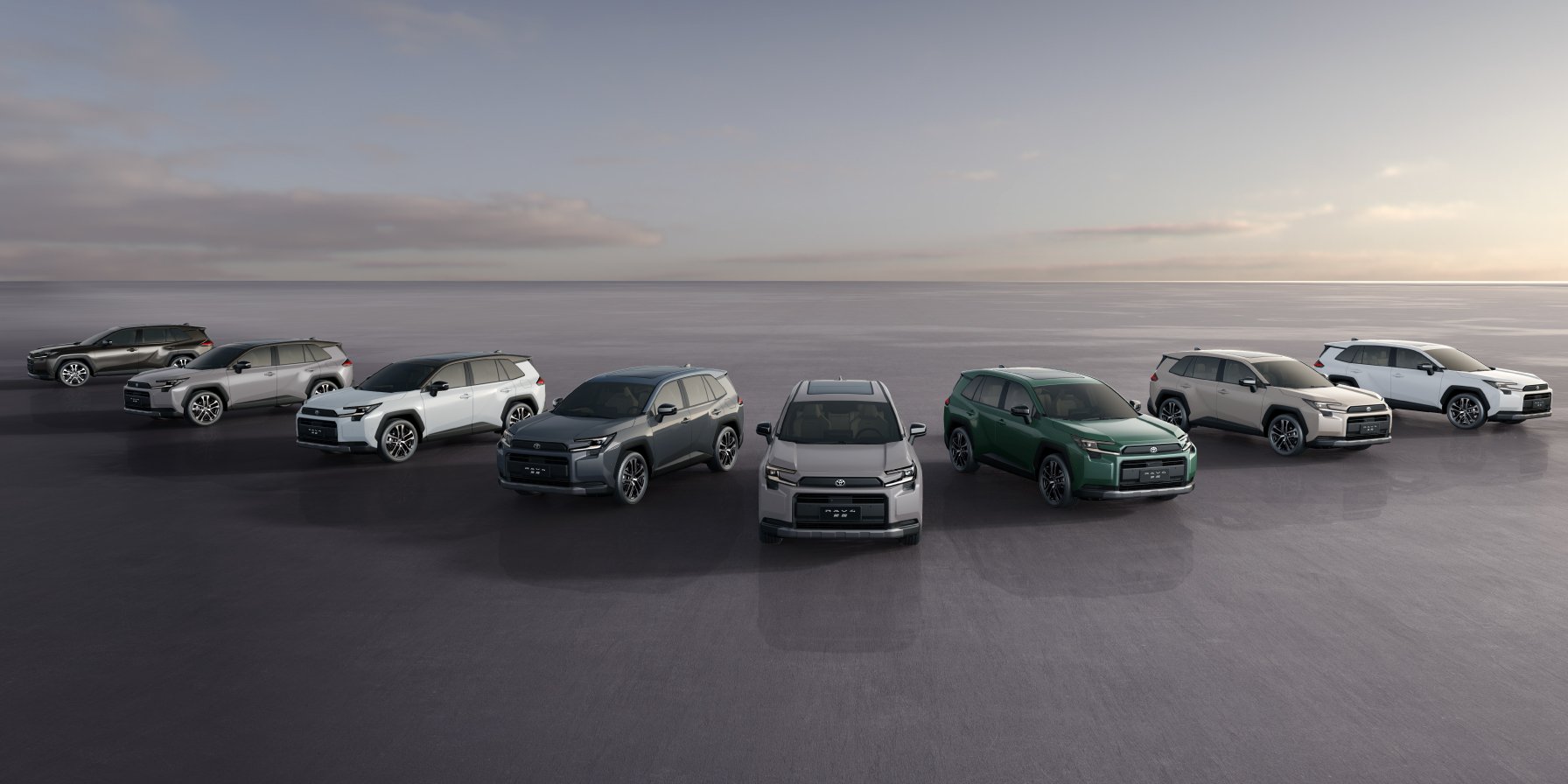
VII. Summary: This Is a Car That "Does Its Accounting Very Clearly"
To draw a conclusion about this all-new RAV4 Rongfang:
Platform and Structure:
No radical hardware revolution, but iterative optimization on the existing mature platform—controllable risk, guaranteed reliability.
Perception and Interaction:
Three-screen architecture + 8155P chip brings the previously "lagging Toyota infotainment" shortcoming up to mainstream level, while still retaining an obsessive pursuit of stability.
Powertrain and Energy Efficiency:
Three options cover users from cost-sensitive to performance/AWD-demanding, and the hybrid system remains one of Toyota's most confident core competencies.
Target Audience Recommendations (from an engineering + usage cost perspective):
Primarily household commuting: prioritize the 2.0L hybrid, two-wheel drive is sufficient, with optimal combined energy consumption and maintenance cost;
Occasional ice/snow/rough road trips, frequent long-distance driving: the 2.5L hybrid + E-FOUR is more worth the investment, as the safety redundancy of AWD is very tangible under extreme conditions;
Limited budget, low annual mileage: the 2.0L naturally aspirated version remains a "simple but durable" choice.
The engineering philosophy of this generation RAV4 Rongfang, summarized in one sentence, is:
It does not pursue flashy "technical curve overtaking,"
But rather, on top of a mature architecture, it raises the three curves of reliability, energy efficiency, and intelligent experience together by a small notch.


