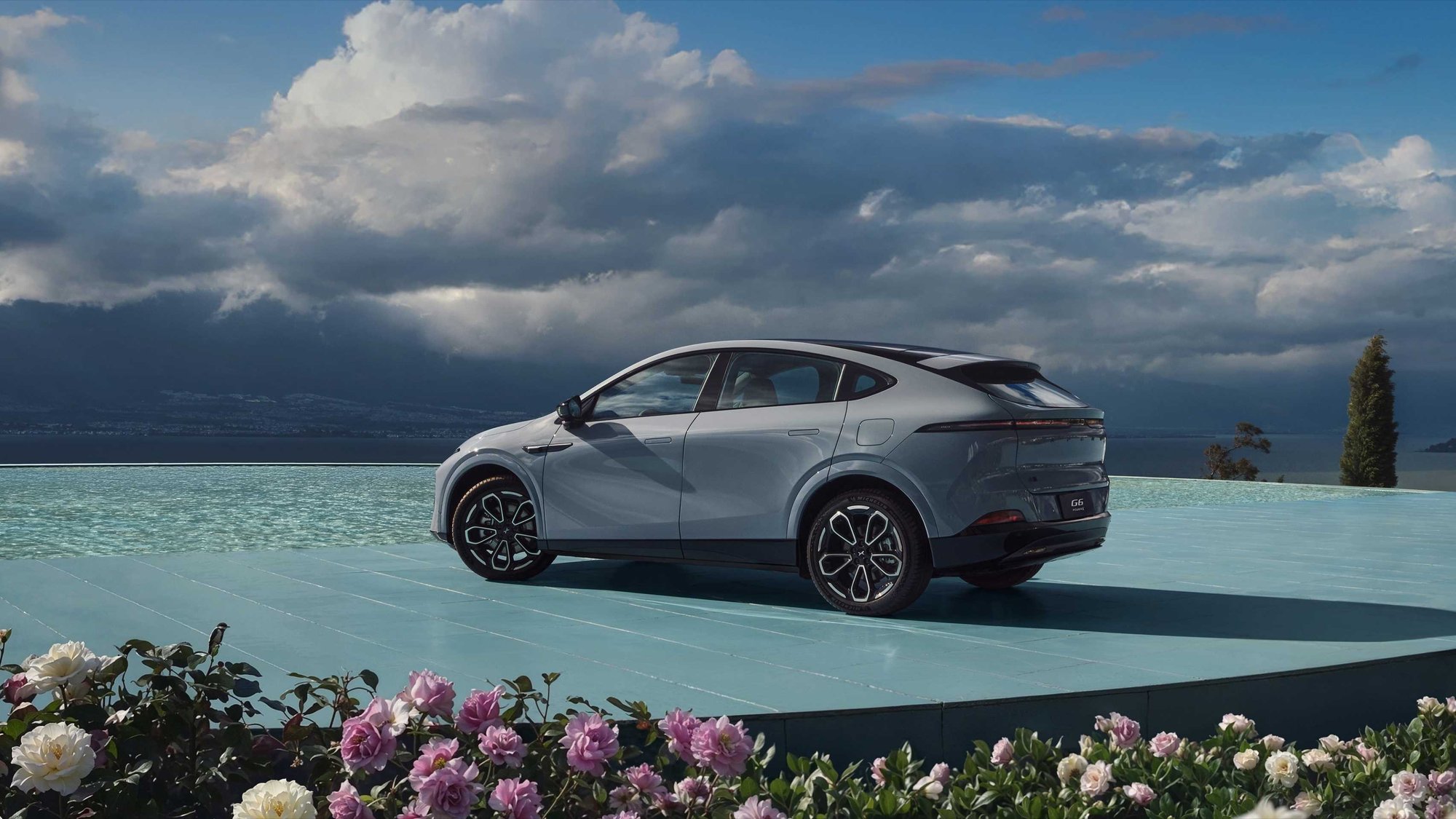
On March 6, XPeng officially unveiled the XPeng G6 Super Extended Range. The new vehicle is offered in three versions, among which the 1704 Max version is priced at 186,800 yuan, the Ultra SE version adds 12,000 yuan on that basis, and the Ultra version adds 20,000 yuan. From the perspective of product definition, this is not simply adding an extended-range system to a pure electric platform, but a mid-size SUV product rebalanced around long range, high charging efficiency, intelligent safety redundancy, and chassis refinement.
From the core parameters, the highlights of the XPeng G6 Super Extended Range are mainly concentrated in four aspects:
First, 430 km of pure electric range;
second, 1,704 km of combined range;
third, an 800V + 5C high-voltage fast-charging platform;
fourth, the second-generation VLA and 2,250 TOPS of effective computing power.
Putting these points together shows that the product logic of this car is not as simple as that of traditional extended-range vehicles, which "use fuel to supplement electricity and solve range anxiety." Instead, it is closer to "maintaining the pure electric experience as much as possible while using the extended-range system to address the uncertainty of charging scenarios."
Little change in exterior styling, but the structural level is more worth examining
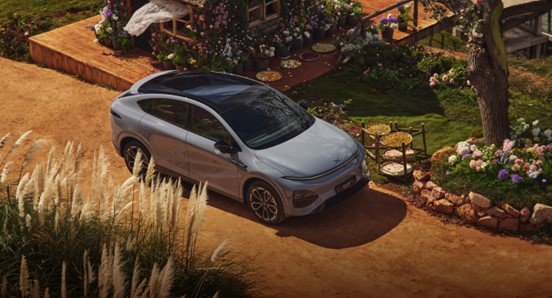
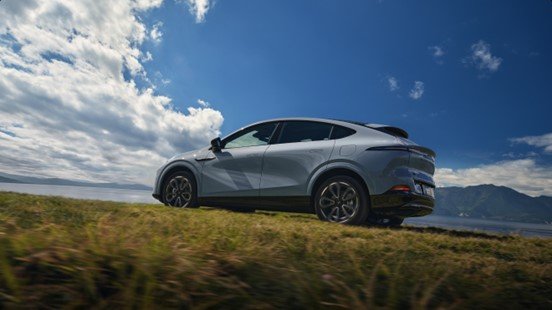
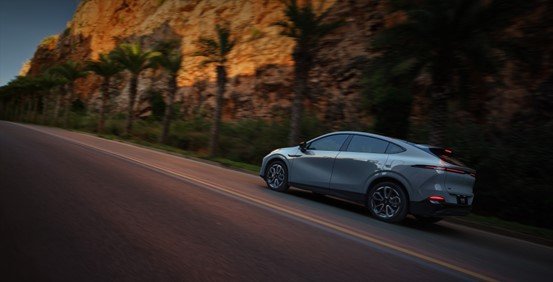
In terms of styling, the XPeng G6 Super Extended Range basically continues the design of the pure electric version. The front face still adopts the Galaxy Light Wing through-type light assembly, and the logo layout remains consistent. The side and rear still retain the standard coupe SUV silhouette, including the sloping roofline, hidden door handles, and through-type taillights, with no obvious changes to these design elements.
The most intuitive difference between the extended-range version and the pure electric version is mainly the newly added POWER X badge at the rear. From an engineering perspective, this means the new car controls the sense of design fragmentation caused by the powertrain change as much as possible at the visual level, continuing the platform-based development approach.
In terms of body dimensions, the new car measures 4,771/1,920/1,650 mm in length, width, and height, with a wheelbase of 2,890 mm. The body length is 13 mm longer than that of the pure electric version. This usually means that after the introduction of the extended-range system, adaptive adjustments were made to the front and rear compartment layout, thermal management system, exhaust system, or energy layout, but the overall platform architecture has not been noticeably disrupted, indicating that the vehicle integration level is still relatively mature.
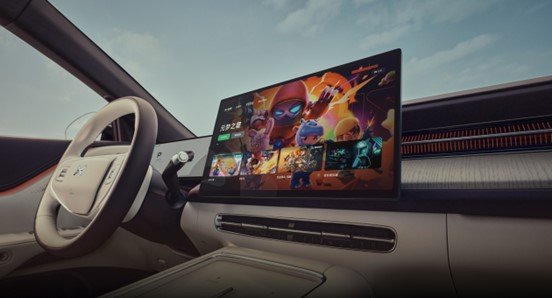
The significance of the extended-range system is not just adding an engine
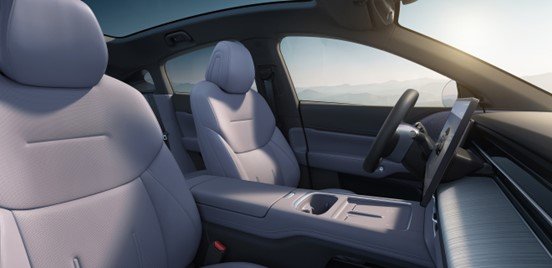
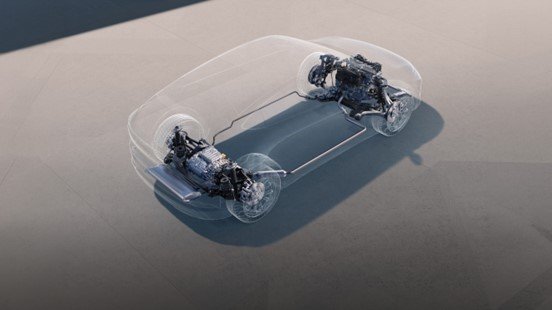
In terms of the powertrain, the XPeng G6 Super Extended Range adopts an extended-range power architecture composed of a 1.5T engine and an electric motor. Among these, the engine's maximum net power is 110 kW, and the rated power of the drive motor is also 110 kW.
It should be made clear that the core task of the engine in an extended-range vehicle is not to directly participate in driving the wheels under most operating conditions, but to serve as a power generation unit for the vehicle's energy system. Therefore, its evaluation criteria are not completely consistent with those of traditional fuel SUVs. The focus is not on extreme power output, but on the following dimensions:
The first is power generation efficiency and thermal efficiency performance;
the second is the NVH level when it intervenes;
the third is continuous power generation capability under high load;
the fourth is the coordination efficiency with the high-voltage platform, battery, and electric drive.
If understood from an engineering logic, the real difficulty of the XPeng G6 Super Extended Range is not "installing a 1.5T engine," but how to keep the engine working in a more efficient and smoother range under various SOC intervals, different ambient temperatures, and different road loads. Whether an extended-range car feels premium often does not depend on the on-paper parameters, but on whether the energy management strategy is mature.
55.8 kWh battery + 60 L fuel tank forms a dual-redundancy range solution
In terms of range, the XPeng G6 Super Extended Range is equipped with a 55.8 kWh battery pack and a 60 L fuel tank. The official figures are:
430 km of pure electric range,
1,704 km of combined range.
If only looking at the parameters, 430 km of pure electric range has already clearly exceeded that of many plug-in hybrid or extended-range SUVs in the same class. Its significance lies in the fact that, in most urban usage scenarios, this car can be used more extensively as a "pure electric vehicle." In other words, during users' daily commuting, the frequency of engine intervention will be significantly reduced, and the vehicle's driving experience, quietness, and energy consumption performance will be closer to those of a pure electric model.
What the 60 L fuel tank provides is range redundancy under long-distance conditions. For high-speed cruising, intercity commuting, or low-temperature winter environments, this "large battery + large fuel tank" combination is essentially expanding the vehicle's usage boundaries.
The value of this combination is not simply looking at the figure of 1,704 km, but that it breaks down users' core anxiety into two levels:
daily scenarios are solved by the large battery,
and long-distance scenarios are solved by the extended-range system.
This offers more advantages at the experience level than traditional extended-range solutions that rely solely on a small-to-medium battery plus frequent engine intervention.
The 800V + 5C platform makes no compromise, and charging efficiency still maintains a pure electric approach
In terms of charging, the XPeng G6 Super Extended Range adopts an 800V + 5C high-voltage platform. The official figure is that 12 minutes of charging can add 314 km of range.
This point is very critical, because although many extended-range vehicles have the advantage of long range, they do not invest in a very high-spec platform architecture in the charging segment, ultimately resulting in users being able to charge, but without a particularly outstanding charging experience. The XPeng G6 Super Extended Range, however, continues to retain a high-voltage fast-charging platform, indicating that its underlying logic is not to treat extended range as a "low-cost compromise solution," but as an extension of the capabilities of a pure electric platform.
Technically speaking, the advantages of an 800V high-voltage platform are mainly reflected in three aspects:
first, reducing the current load during high-power charging, thereby reducing heat generation;
second, improving charging efficiency and shortening charging time in the early high-SOC stage;
third, being more conducive to the coordination of a high-performance electric drive system and the vehicle's thermal management.
For users, the result is two words: saving time. This is also where the true value of a high-voltage platform lies.
Second-generation VLA and 2,250 TOPS: the point is not just greater computing power
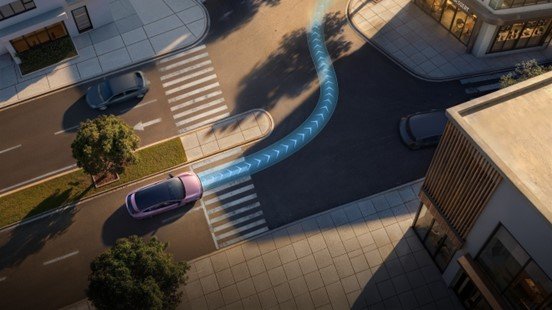
In terms of intelligence, the XPeng G6 Super Extended Range is equipped with the second-generation VLA, with effective computing power reaching 2,250 TOPS. If only looking at the number, 2,250 TOPS is already a fairly high level of hardware reserve, but from an engineering perspective, computing power is not the only focus.
What really needs attention are two things:
first, whether computing power can be effectively transformed into perception, decision-making, and execution capabilities;
second, whether a high-computing-power platform has sufficient redundancy and stability under complex operating conditions.
XPeng officially also emphasized several safety capabilities, including:
stable driving after a tire blowout at 180 km/h,
AES on ice and snow supporting up to 130 km/h,
and AEB with a maximum stopping speed of 130 km/h.
This shows that its communication focus is no longer just "whether it can drive intelligently," but has further shifted to "whether it can be safer under extreme conditions." This is a very important change after the development of driver assistance systems to the current stage, because users' attention to system capabilities is shifting from "feature coverage" to "boundary performance" and "failure protection."
Such capabilities involve not only perception hardware and computing platforms, but also the response speed of chassis actuators, estimation of tire grip status, yaw control strategies, braking redundancy, and real-time modeling of vehicle status. Therefore, if these capabilities can ultimately be delivered stably in mass production, their value will be higher than simply adding a few more intelligent driving scenarios.
Chassis structure specifications are not low, and standard DCC is a key signal
In terms of the chassis, the XPeng G6 Super Extended Range is equipped with the Taiji AI chassis, adopting front double wishbone and rear five-link independent suspension, and is equipped with a Taiji hydraulic bushing matrix, while also featuring standard DCC adaptive damping shock absorbers.
From the perspective of mechanical structure, compared with the more common MacPherson setup, front double wishbones theoretically have a higher upper limit in lateral support, camber control, and steering response; the rear five-link is more conducive to balancing comfort and tire contact performance. Combined with DCC and hydraulic bushings, the vehicle's ability in vibration filtering, pitch suppression, and body control through continuous curves should theoretically be superior to many products in the same class that lean toward family use.
There is a very realistic issue here: because extended-range vehicles add an engine, fuel tank, exhaust, and related accessories, curb weight and front-rear axle load distribution usually face new tuning challenges. Therefore, whether the chassis configuration can keep up is the key to determining whether an extended-range SUV has a "premium feel."
The specifications given by the XPeng G6 Super Extended Range in the chassis section are not low, which at least shows that the manufacturer has realized that simply competing on range is no longer enough, and driving quality must also be improved.
What is the core competitiveness of this car
In summary, the competitiveness of the XPeng G6 Super Extended Range is not that a particular parameter is especially exaggerated, but that it attempts to turn several key capabilities into a unified system:
First, electric drive priority.
430 km of pure electric range determines that in a large number of commuting scenarios it can use the engine as little as possible and maintain a pure electric experience.
Second, efficient charging.
The 800V + 5C platform makes no compromise, meaning that even as an extended-range vehicle, it has not given up the route of high-efficiency fast charging.
Third, sufficient long-distance redundancy.
The 60 L fuel tank and 1,704 km of combined range make up for the shortcomings of pure electric vehicles in cross-regional scenarios.
Fourth, intelligent safety is developing toward high-boundary capabilities.
The second-generation VLA and 2,250 TOPS are only the foundation. The real focus is on extreme safety performance such as stable driving after a high-speed tire blowout, ice and snow AES, and high-speed AEB.
Fifth, relatively complete chassis specifications.
The combination of double wishbones, five-link, DCC, and hydraulic bushings shows that it is not a car that only looks at range on paper.
Conclusion
From the information announced so far, the product direction of the XPeng G6 Super Extended Range is relatively clear:
it does not use extended-range technology to replace the pure electric experience, but attempts to expand the applicable scope of the pure electric experience through the extended-range system.
The difference between these two is huge. The former is a compromise approach, while the latter is a system integration approach.
If the subsequent production car performs well in the following areas:
NVH control when the engine intervenes
energy consumption performance under high-speed depleted-charge conditions
vibration filtering and support of the chassis under complex road conditions
real delivery of intelligent safety capabilities
charging stability of 800V fast charging at actual stations
then the XPeng G6 Super Extended Range will indeed have relatively strong technical persuasiveness in the mid-size SUV market priced from the 180,000 yuan to 200,000 yuan range.
Its focus has never been only "1,704 km of range," but that behind these 1,704 km, XPeng wants to prove that it is already able to integrate the battery, electric drive, range extender, high-voltage platform, intelligent safety, and chassis control into the same product logic.
This matter is more important than simply launching an extended-range vehicle.


