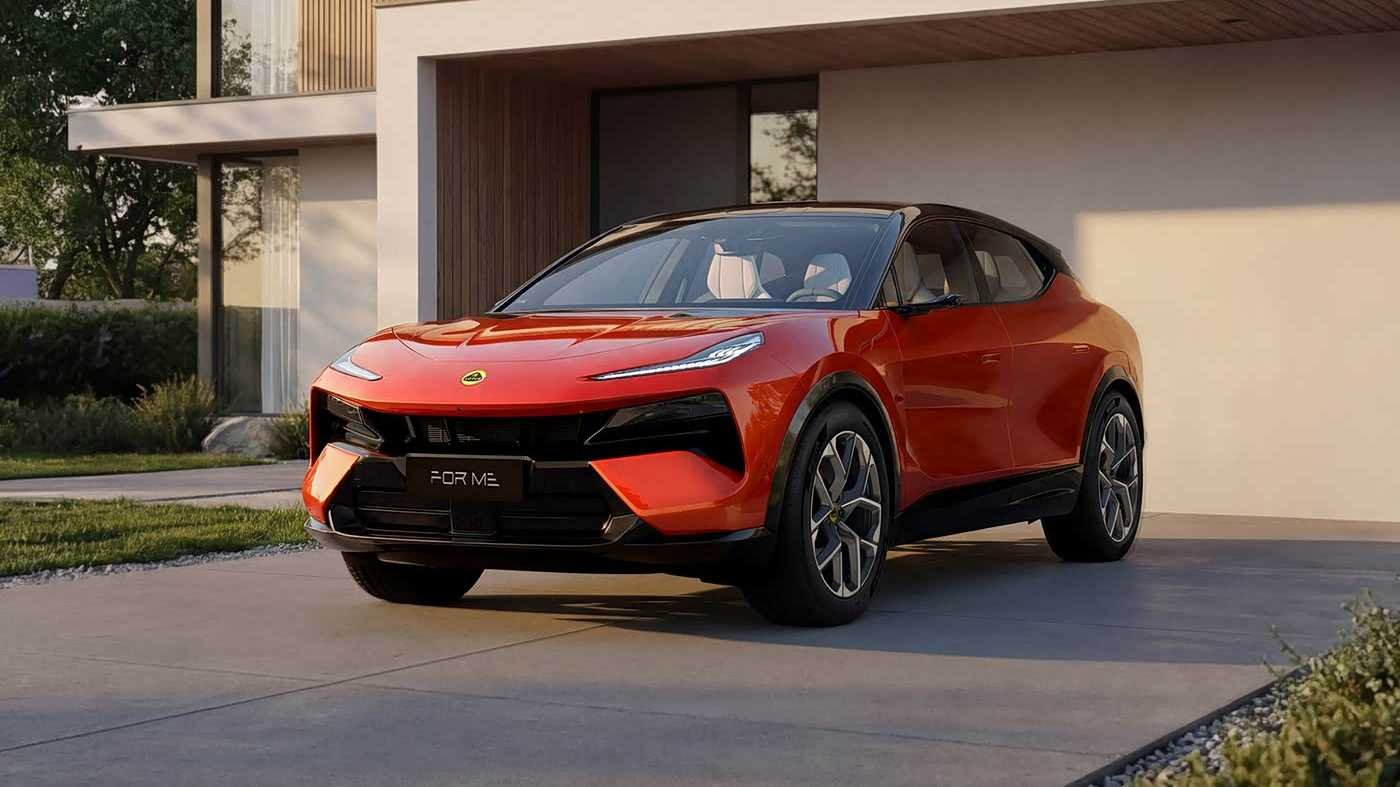
If we look only at positioning, the Lotus For Me is a "supercar SUV"; but from an engineering perspective, the problem this car is really trying to solve is not "how to make an SUV fast," but rather "how to keep a high-performance hybrid vehicle capable of delivering usable performance output under different operating conditions." According to currently available information, the core foundation of the new car is the X-Hybrid Ultra Long Range Super Hybrid architecture, adopting a 900V high-voltage platform, dual permanent magnet synchronous motors, and a battery and power generation system oriented toward continuous power output.
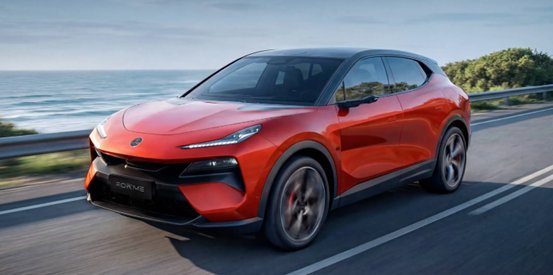
First, look at the powertrain itself. Public information shows that the Lotus For Me has a system peak output of 952Ps, a 0-100km/h acceleration time of 3.3 seconds, a 0-200km/h acceleration time of 10.5 seconds, and a 0-400-meter acceleration result of 11.16 seconds. For an SUV, these figures already place it in the high-performance range, but raw peak parameters are not the most noteworthy aspect of this car. For engineers, what is more valuable is whether it can still maintain a power level close to its initial state after heat soak, low battery, and high-speed cruising.

What Lotus is emphasizing this time is precisely this point. Officially disclosed information states that with 10% battery remaining, the For Me can still achieve 0-100km/h acceleration in 3.5 seconds. This indicates that its design goal is not merely "very fast when fully charged," but rather to turn performance output from a short-term peak into a capability that can be maintained across most usable operating conditions. For a high-performance hybrid vehicle, this usually means three links must hold true at the same time: the battery must have a sufficiently high discharge rate, thermal management must be able to suppress temperature rise, and the control strategy must still allow relatively high power release under low SOC conditions.
Now look at its energy system design. Public information shows that this car is equipped with an 11C ultra-high discharge rate battery pack, with a battery capacity of about 70kWh, paired with a 150kW onboard power generation system. The official statement is that the 70-degree battery can release all its energy within 5 minutes, and the power generation system will try to keep the battery operating range within the 30%-80% efficiency window. In other words, this system is not designed simply around the idea that "the more charge the better," but around "continuous output capability within the efficiency range." For a performance car, this approach is more reasonable than simply increasing battery capacity, because it directly relates to whether mid-to-late-stage re-acceleration is still strong enough and whether all-wheel-drive capability can still be maintained after continuous high load.
Public information also mentions that under depleted-charge conditions, while cruising at 120km/h, the For Me can additionally replenish 25 kWh of electricity per hour. If this figure holds, its significance is not in "how much fuel is saved," but in the fact that in long-distance high-speed scenarios, the system still has the ability to replenish enough electricity to the power battery, thereby preventing the vehicle from entering an obvious performance degradation zone after continuous high-speed driving. Many high-performance new energy vehicles are very strong in the city, but once they encounter long-distance highway driving, high temperatures, or low battery conditions, their weaknesses tend to show. This structure of the For Me is clearly aimed at this problem.
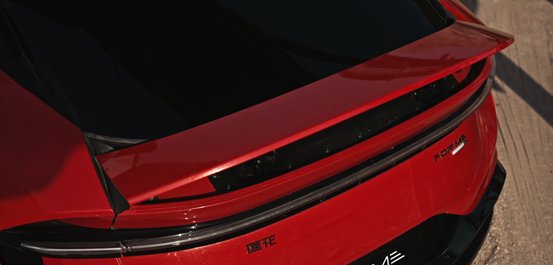
The chassis and dynamic hardware are also worth noting. According to currently public information, the new car is equipped with Brembo six-piston brake calipers, dual-chamber air suspension, dual-valve CCD dampers, and an active rear wing, while some versions are also mentioned as having a 48V active stabilizer bar. For a high-power SUV, what truly determines whether it feels like a performance car is often not straight-line acceleration, but brake heat fade control, center-of-gravity transfer control, and whether it can still contain body attitude despite substantial mass. In other words, the engineering focus of the For Me is not only on the powertrain; the chassis execution layer has also been raised to a relatively high specification.
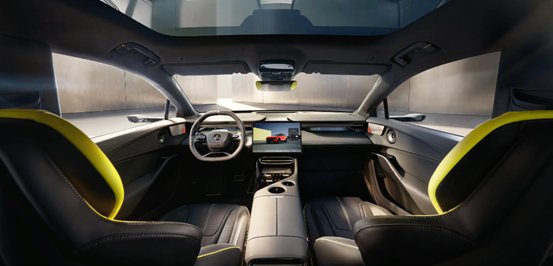
In terms of drive and control logic, the For Me adopts an all-wheel-drive system and offers modes such as EV priority, fuel priority, forced EV, and Lotus Smart Drive, and also supports road condition prediction and energy distribution optimization based on navigation information. This logic is essentially predictive energy management. It is no longer merely a passive switch of "generate electricity when charge is low, drive on electricity when charge is high," but rather prepares an appropriate energy reserve in advance according to the route and operating conditions. For a performance car, this kind of control strategy is more important than simply pursuing low fuel consumption, because it determines whether the system can deliver output immediately when the driver needs power.
In terms of range and energy consumption, the public figure is a combined range of more than 1400km and a WLTC combined fuel consumption of 0.07L/100km. Fuel consumption data from such operating cycles is more suitable as a reference value for system efficiency rather than as a conclusion for daily use. What is truly worth paying attention to is not how low it can go in the laboratory, but whether it can still maintain a relatively stable balance between energy consumption and performance under complex conditions such as high-speed cruising, frequent acceleration, low battery, and full load. From the information released so far, the technical direction of the Lotus For Me is already very clear: it is not a performance-enhanced version of a traditional plug-in hybrid SUV, but an attempt to truly embed the power sustainability of a high-performance car into a hybrid architecture.


