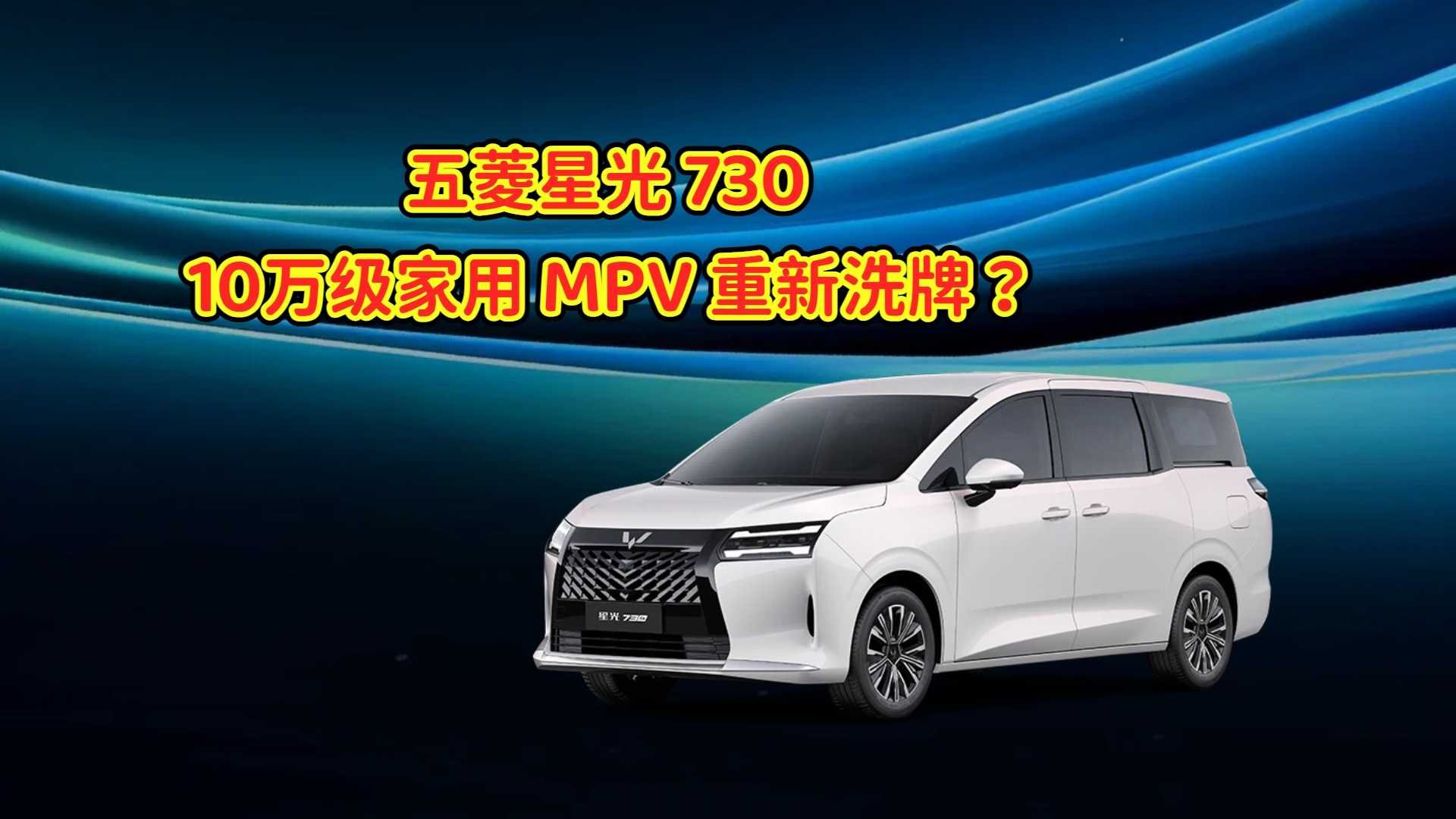
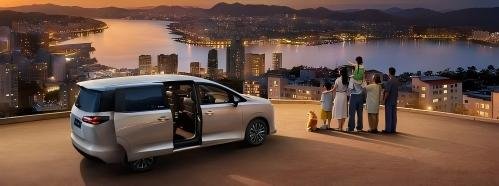
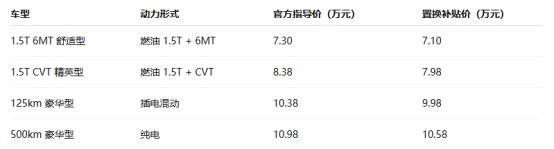
On November 12, the Wuling Starlight 730 was officially launched. The new vehicle comes in 4 trims, covering three powertrain forms: gasoline, plug-in hybrid, and pure electric, with an official guide price of 73,000–109,800 yuan, and a trade-in subsidy price of 71,000–105,800 yuan; those who place an order from November 12 to December 31 can enjoy the "Seven Launch Gifts."
From Hongguang to Xingchen, Starlight, and now the Starlight 730, Wuling has accumulated more than 8 million users in the MPV segment. This time, the Starlight 730 uses a combination punch of "true 7-seat large space + electric sliding doors + one car with three powertrains" to push the threshold of 100,000-yuan-class family MPVs down another notch.
I. Models and Prices: Full Coverage of Gasoline/Hybrid/Electric, Fully Satisfying Family Budgets from 70,000–110,000
The price and model lineup of the Starlight 730 this time are very straightforward:
At the same time as launch, the official side also offers seven major gifts: "Renewal Gift, Thanksgiving Gift, Upgrade Gift, Protection Gift, Warranty Gift, Energy Replenishment Gift, and Finance Gift," including no-threshold trade-in subsidies, additional subsidies for existing users, optional electric sliding door discounts, complimentary solar film, lifetime warranty for the three electric systems (new energy models), and a 7kW charging pile with basic installation service, among others. The sincerity toward the first batch of ordering users is not low.
To put it simply by audience, this pricing basically corresponds to three types of family needs:
First-time buyers who need a large seven-seater: choose the 1.5T MT/CVT gasoline version
Those who want to lower commuting costs but occasionally take long trips: look at the 125 km plug-in hybrid version
Families that already have a gasoline car and want to add a home electric car: target the 500 km pure electric version
Overall, Wuling's thinking is very clear: one car covers the entire 70,000–110,000 yuan family MPV demand band.
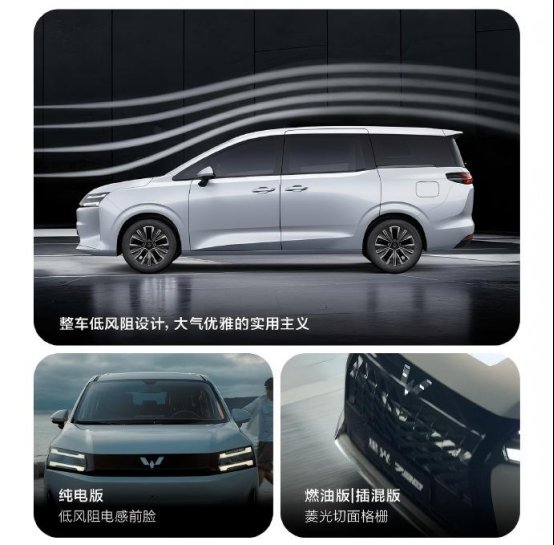
II. Design and Body: Gasoline/Hybrid Share the Same Face, Pure Electric Has an Independent Front Face
1. Exterior: A passenger-car style leaning toward family use
The gasoline and plug-in hybrid versions adopt the same front face, with a large spindle-shaped black grille paired with quadrilateral headlights. Compared with traditional commercial MPVs, the "tool vehicle" vibe is much weaker, getting closer to passenger-car aesthetics, with an overall style leaning younger and more urban-family oriented.
The pure electric version switches to the closed grille commonly seen on new energy vehicles, retaining only a black trim panel in the middle of the light cluster. The visuals are cleaner, and it is easier to tell at a glance that "this is pure electric."
The rear of all three powertrain versions has a unified design, with polygonal taillights echoing the front lights, creating a wider visual effect through horizontal stretching. The overall proportions are quite pleasing.
2. Body dimensions: Standard mid-size MPV volume
Length × Width × Height: 4910 × 1850 × 1770 mm
Wheelbase: 2910 mm
Body type: 5-door 7-seat MPV
The dimensions have already entered the traditional mid-size MPV category. With a 2910 mm wheelbase and a body length of nearly 4.9 m, the rear rows and trunk have enough room to perform, which is the foundation for the Starlight 730 daring to主打 "all-around comfortable large seven-seater."
III. Electric Sliding Doors: Rare in the 100,000-yuan class, truly hitting family pain points
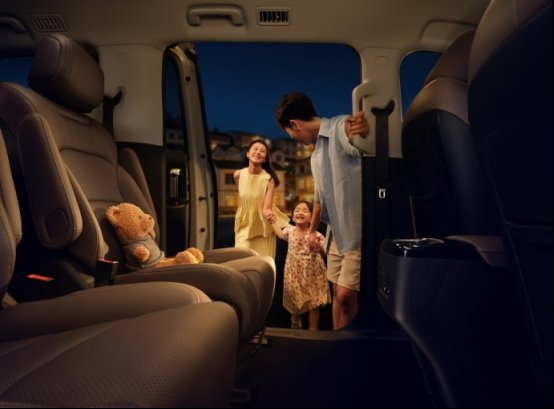
Among 100,000-yuan-class MPVs, products with electric sliding doors are not many, and the Starlight 730 counts as one of the few, with hidden slide rails, so it does not look so much like a "van."
Official data shows the sliding door opening height is 1145 mm, the sill height is relatively low, and the B-pillar also integrates an assist grip.
For typical family scenarios, the actual value of electric sliding doors is very intuitive:
Opening the door in narrow underground parking spaces does not take up lateral space, reducing the risk of "dooring" and scraping the neighboring car
Elderly people have a handhold to assist them getting in and out, without having to strain to bend over and lift their legs
Children do not need to "shove the door hard" when getting in and out, improving both safety and controllability
It can be said that Wuling has brought a feature commonly seen on 200,000-yuan-class joint-venture MPVs down to the 100,000-yuan price point early, creating an obvious difference from main rivals such as the GAC Trumpchi M6 and Maxus G50, which still mainly use ordinary side-hinged doors.
IV. Interior and Cabin: Warm Family Atmosphere + Scenario-Based Infotainment
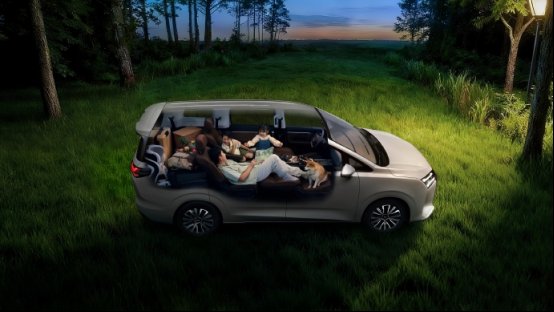
For the interior, the Starlight 730 offers two-tone interior themes such as Walnut Brown and Warm Sand Brown. The overall layout is wraparound, paired with large areas of soft covering. The first impression leans homey and warm, rather than a cold "tech laboratory."
The center console is equipped with a 12.8-inch vertical floating screen, with built-in vehicle connectivity and multiple scenario modes, such as:
Nap mode
Camping mode
Stay-powered after leaving the vehicle mode
These settings are very much in line with the currently popular "light camping + nearby trips." Users can obtain basic in-car rest and power supply capabilities without having to modify the car themselves.
In terms of configuration, depending on the model, it provides:
540° panoramic view (including transparent chassis)
50W wireless phone charging
Multiple USB ports
Child safety seat anchors reserved for four seats, etc.
Overall, it belongs to "doing the essentials well," not simply piling up specs, but matching around high-frequency family scenarios.
V. Space and Seating: Not Just "Able to Squeeze in Seven People"
Space is one of the key points of the Starlight 730. In addition to the 4910 mm body length and 2910 mm wheelbase, the official detailed figures are also quite aggressive:
Effective vehicle length: 3331 mm
Shoulder lateral width: 1500 mm
Middle and rear seat spacing: up to 1780 mm
"2+2+3" true 7-seat layout
Second-row aisle width: up to 230 mm
Rear space utilization rate: 88%
Combining these figures, several highlights can be anticipated:
① Second-row captain's chairs
An aisle is left in the middle, making access to the third row more convenient
The second row can independently adjust the backrest and fore-aft position, improving long-distance comfort
② The third row is no longer a "makeshift spot for children"
Over 1.2 m of third-row headroom, plus a maximum middle-and-rear seat spacing of 1780 mm
Adults face little pressure on short and medium trips, making it friendlier for high-frequency scenarios such as "family outings"
③ Strong variability in luggage space
With the third row folded down, trunk volume can expand to about 1200 L, basically handling large items such as camping gear and baby strollers with ease
Multiple folding combinations for the second and third rows allow free switching between "more people + less luggage" and "fewer people + more gear"
Overall, the space strategy of the Starlight 730 is not to "force in seven seats," but to ensure as much as possible that all three rows are "proper seats" that can be used normally, making it more targeted for multi-member families.
VI. Three Powertrain Systems: Gasoline/Hybrid/Electric Each with a Clear Positioning
Another major highlight of the Starlight 730 is the simultaneous launch of gasoline, plug-in hybrid, and pure electric powertrains on the same platform, rolling out a full-energy solution all at once.
1. Gasoline version: 1.5T high-torque engine
The gasoline version uses an all-new 1.5T direct-injection engine (LC4), with a maximum power of 130 kW and maximum torque of 290 N·m, matched with a 6MT or CVT transmission.
At the 70,000–80,000 yuan price point, these power figures are not low, even approaching many 1.5T joint-venture compact SUVs, giving it solid confidence for climbing and highway overtaking when fully loaded.
More suitable for:
Users with more highway and mountain-road driving conditions
Families with average energy replenishment conditions who do not want to try new energy for the time being
2. Plug-in hybrid version: Lingxi Power 3.0 + 125 km pure electric range
The plug-in hybrid 125 km Luxury trim is equipped with the Lingxi Power 3.0 hybrid system:
1.5L hybrid-specific engine, maximum power 78 kW, thermal efficiency up to 43.2%
Motor maximum power 145 kW, maximum torque 230 N·m
CLTC pure electric range 125 km, combined range 1100 km
Fuel consumption at low battery 5.3 L/100 km
Supports 30–80% fast charging in about 0.5 hours
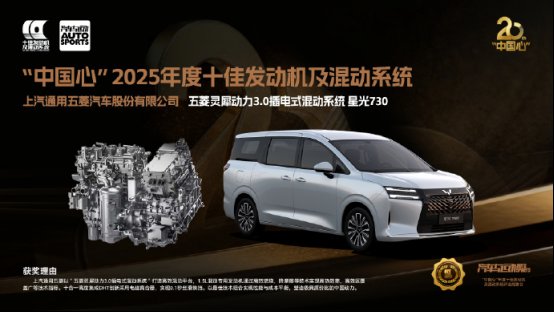
This system has already passed the "China Automotive Technology and Research Center High-Quality Hybrid Certification" and was selected for the "2025 China Heart Top Ten Engines and Hybrid Systems." Its technical backing is relatively strong in its class.
More suitable for:
Mostly urban commuting, with a daily trip of 50–80 km, basically able to commute purely on electricity every day
Families that still need to undertake long-distance self-driving tasks on weekends and holidays, hoping for "dual insurance of gasoline and electricity"
3. Pure electric version: Shenlian battery + 500 km range
The pure electric 500 km Luxury trim uses single-motor drive, with a maximum power of 100 kW, equipped with a 60 kWh Shenlian lithium iron phosphate battery, CLTC range 500 km, official energy consumption about 13.6 kWh/100 km, supports 2C fast charging, and charges from 30–80% in about 20 minutes.
The Shenlian battery currently has more than 3 million installation records in Wuling's new energy system, maintaining "zero spontaneous combustion in collisions," and meets the 2026 new national standard ahead of time. For family users who value new energy safety, this is a solid bonus.
More suitable for:
Families that already have a gasoline or plug-in hybrid model, with the pure electric version serving as the main commuter/nearby-trip car
Users with fixed charging conditions in their residential compound or home, hoping to minimize vehicle use costs
VII. Chassis and Safety: Dual Independent Suspension + High-Strength Steel Body, Family Orientation Well Delivered
For the chassis, the Starlight 730 adopts front MacPherson + rear multi-link independent suspension, which is not common among 100,000-yuan-class MPVs, as many rivals still use a rear torsion beam structure. The official side also mentioned that the stiffness of 24 bushings in the rear suspension has been finely tuned, with the aim of balancing comfort and anti-motion-sickness performance.
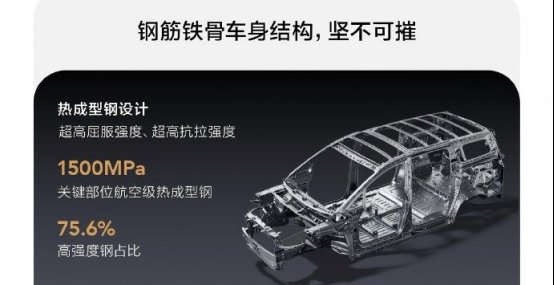
In terms of safety configuration, the new car uses a six-ring high-strength steel cage body, with high-strength steel accounting for more than 75%, and 1500 MPa hot-formed steel at key positions. Front and rear anti-collision beams + energy-absorbing boxes are standard across the lineup, with the front anti-collision beam and energy-absorbing box made of 2.5 mm aluminum alloy. It is also equipped with:
Engine drop technology after collision
Multiple airbags, ESP electronic stability system
Some models provide active safety features such as 540° panoramic view and transparent chassis
For user groups that frequently travel with the whole family, the Starlight 730's investment in passive safety and new energy safety is relatively generous.
VIII. Competitors and Market Positioning: Who Will It "Push Against"?
From its positioning, the Starlight 730 faces mainly three types of competitors:
Traditional gasoline family MPVs: GAC Trumpchi M6, Maxus G50, etc.
New energy family MPVs: Forthing Yacht New Energy, GAC Trumpchi E8, etc.
Some compact plug-in hybrid SUVs in a similar price range
Compared with these rivals, the Starlight 730 has several obvious points of differentiation:
Lower price threshold
The 1.5T large seven-seater starts from just over 70,000 yuan, very attractive to budget-sensitive families
At the 100,000–110,000 yuan price point, you can buy a plug-in hybrid/pure electric large seven-seater, which counts as an "entry price" in the new energy MPV camp
Electric sliding doors + dual independent suspension
Most models at the same price still remain at the combination of ordinary side-hinged doors + rear torsion beam, while the Starlight 730 makes up for the shortcomings of this class of MPV in sliding doors and rear suspension structure
One car, three powertrains
One model completes the full-energy layout of MPVs under 100,000 yuan, greatly reducing dealer inventory and user choice difficulty
Of course, the Starlight 730 is not without areas that need verification:
There is still a gap in luxury feel and NVH compared with higher-priced joint-venture MPVs, and it is hard to ask for too much at this price point
The real-world range and energy consumption performance of the plug-in hybrid and pure electric versions still need subsequent test data to support them
IX. Editor's Comment: With a 100,000 Budget, It Deserves to Be in the Top Two Candidates
Based on the current official information, the Starlight 730 feels more like a new MPV answer sheet from Wuling after the "Hongguang era."
Compared with gasoline MPVs at the same price, it offers larger space, more flexible powertrain choices, and a lower entry threshold;
Compared with higher-priced joint-venture MPVs, it uses electric sliding doors, one car with three powertrains, and relatively solid safety configuration to push the product ceiling of 100,000-yuan-class family MPVs up a notch.
If your car-buying conditions are:
Budget locked at 70,000–110,000 yuan;
Must be a true seven-seater, and used frequently by the whole family;
Needs both urban commuting and the ability to handle long holiday trips;
Then the Wuling Starlight 730 is at least worth a serious test drive in the store. No matter whether you ultimately choose gasoline, plug-in hybrid, or pure electric, it has enough reason to enter the "Top 2 candidate list" for family MPVs in this price range.


