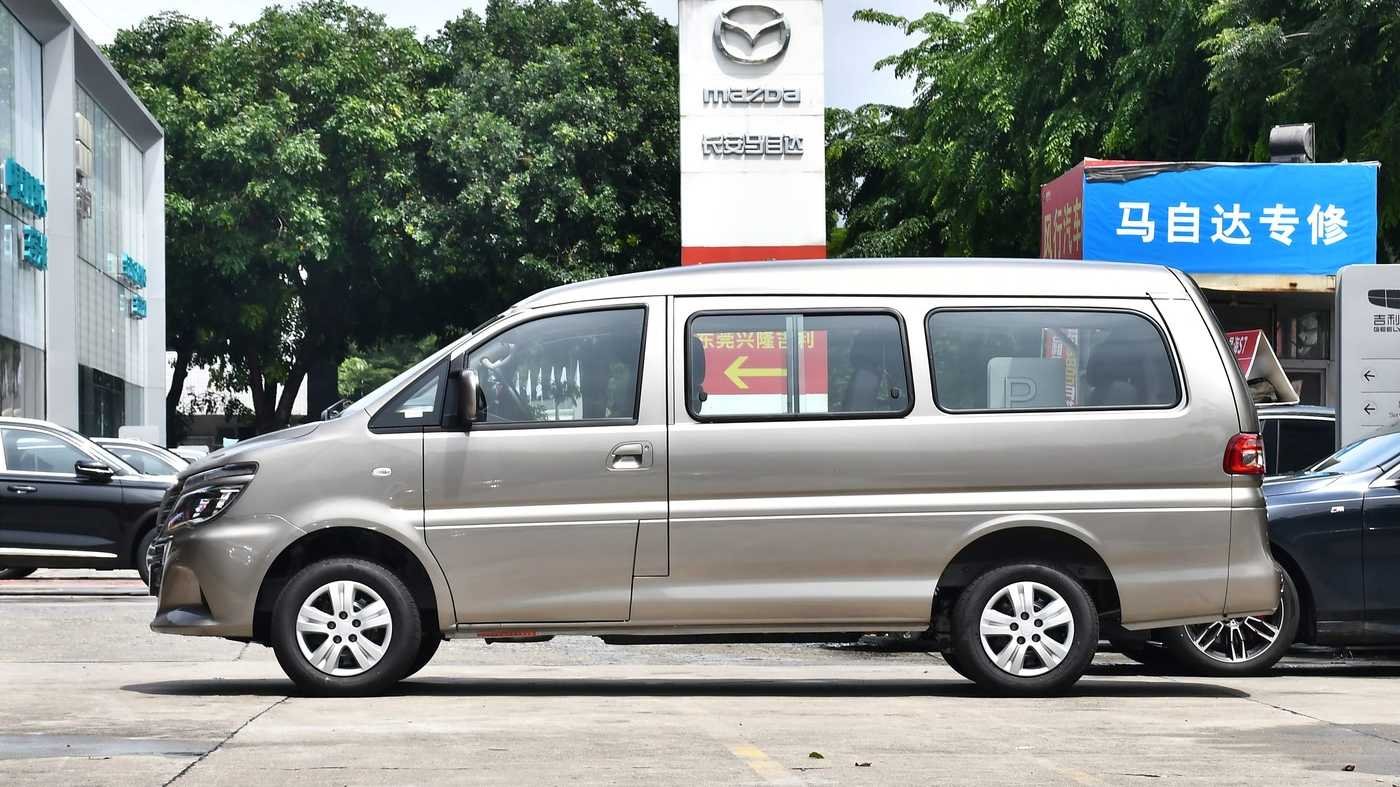
The current Lingzhi M5EV = starting at just over 100,000 yuan, dual-line layout of pure electric/range-extended, two battery range tiers of 420km/460km, and the core is still a wealth-creation tool vehicle that "can haul, can run, and is easy to maintain."
1. What does it "look like now"?
1. Vehicle lineup and price range
Officially, this line has already been unified under the name "Lingzhi New Energy," including the pure electric M5EV and the 1.5L range-extended version, with the latest being the 2025 model. The pure electric part currently mainly promotes four versions:
2025 pure electric 420km City Transport Edition 5-seat: 109,800 yuan
2025 pure electric 420km City Transport Edition 7-seat: 113,500 yuan
2025 pure electric 460km Basic 7-seat: 157,900 yuan
2025 pure electric 460km Basic 9-seat: 159,900 yuan
In other words, the official guide price of the latest Lingzhi M5EV pure electric family now ranges from 109,800 yuan all the way to 159,900 yuan, and with the addition of the 110km range-extended series in between, the entire product line basically covers "those running city transport," "those doing passenger transport," and "those wanting to balance family use."
2. Dimensions and layout
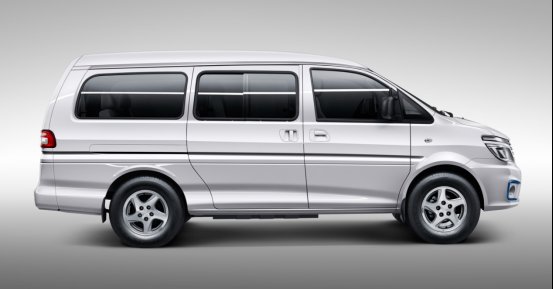
The stance is still typically "Lingzhi-flavored" — narrow and tall, but with a long wheelbase, mostly serving passenger and cargo carrying, not handsome styling:
Length/width/height: 5135×1720×1990/1995mm
Wheelbase: 3000mm
Offers multiple layouts with 5/7/9 seats
For wealth-creation users, these numbers are crucial:
A body length of over 5.1 meters + a 3-meter wheelbase ensures practical space for the third row and the luggage compartment.
A vehicle height of about 1.99 meters, combined with sliding side doors, makes loading and unloading goods and passengers convenient, and is very friendly for road conditions like supermarkets and farmers' markets.
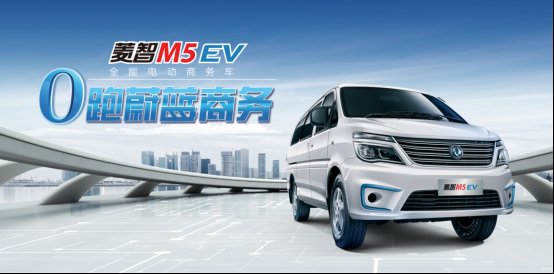
In terms of appearance, the 2025 model's unified Lingzhi family boxy shape, with a closed-off front grille + blue trim accents to highlight its "new energy identity," does not play with overly complex design — at a glance, it is a "tool vehicle," and that itself is its positioning.
3. Interaction and functions
The cabin layout still leans toward "practical solutions":
The center console is T-shaped, with materials mainly hard plastic; the advantage is durability and easy cleaning.
The standard or optional 8-inch central control screen supports basic functions such as phone connectivity, Bluetooth, and reversing camera, meeting daily vehicle use and travel scenarios.
There are many storage compartments inside: below the center console, on top of the dashboard, on the doors, and in the middle, all leaving space for documents, POS machines, and phones. For bosses running businesses, this is actually more real than "ambient lighting."
In one sentence: the interior is not for "style," but for "toughness."
2. 420 kilometers vs 460 kilometers: how to choose between range and power?
1. 420km City Transport Edition: for bosses "running in the city"
The 2025 420km City Transport Edition is equipped with a relatively pragmatic pure electric system:
Motor power: 70kW, torque 175N·m
Battery: about 64.4kWh lithium iron phosphate battery, CLTC range 420 kilometers
Top speed 100km/h, a typical urban + near-suburban operating condition setup.
Put the rest of the parameters on a 7-seat MPV, and there is no talk of passion, only of sufficiency:
At urban cruising speeds of 40–60km/h, motor output is smooth, and starts are not sluggish.
When fully loaded going up elevated roads and ring roads, acceleration will not be very "crazy," but you also cannot expect it to have the push-in-the-back feeling of a passenger car.
In terms of charging, fast charging can go from 30% to 80% in about 30 minutes, and slow charging basically fills it up overnight, which is relatively friendly for users doing short-distance city distribution, ride-hailing, and urban passenger transport.
The 420km City Transport Edition is a typical "low transport cost, sufficient travel" version, suitable for fixed routes of about 200 kilometers per day.
2. 460km Basic: for passenger/business use that "runs a bit farther"
Moving upward, there is the 460km Basic 7/9-seat, where both power and cost clearly rise by another level:
Motor power: 150kW, traction 340N·m
CLTC range: 460km, also a lithium iron phosphate battery.
These parameters are already close to the level of some household pure electric SUVs, and for an MPV mainly focused on operations, this is a somewhat "abundant" setup:
Highway cruising capability is greatly improved, and running intercity passenger transport, suburban tourism, and business reception will increase noticeably.
Starting fully loaded and mid-range re-acceleration gain more confidence, especially with the 9-seat version where the difference is more obvious when full of people + luggage.
Of course, the stronger motor and larger battery bring a guide price of 157,900–159,900 yuan, opening up a step above the City Transport Edition.
If you:
do intercity passenger transport/business reception,
often run one-way 200km+ per day, and drive on highways,
then the investment in the 460km version is meaningful — the vehicle price is tens of thousands more, but some of that can be earned back through per-vehicle efficiency and comfort.
3. Space and loading: it is still that "can haul" Lingzhi
Space is Lingzhi's foundation, and this generation of M5EV has not lost that either.
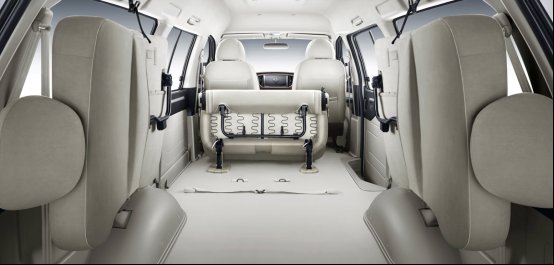
1. Multi-seat layout
5-seat: more oriented toward "city transport + cargo hauling," with more longitudinal space left in the second row, allowing mixed "goods + people" loading.
7-seat: 2+2+3 or 2+3+2 type layout, balancing transport and family use.
9-seat: a typical setup for shuttle/industrial park vehicles/hotels, with more emphasis on "approved passenger capacity."
2. Space utilization
The benefit of a 5135mm body length + 3000mm wheelbase is —
In the 9-seat state, the trunk still has usable depth, so boxes and goods do not all have to be stuffed under the chassis.
By folding and adjusting the rear three rows as needed, this vehicle can easily switch between "carrying people" and "carrying goods."
At the same time, the body width is only 1720mm, making it more agile entering and exiting old urban alleys, urban villages, and wholesale markets than some wider MPVs. This is actually very important for city transport and small B-end users.
4. Intelligence and vehicle operating costs: no gimmicks, but the numbers add up
1. Infotainment and safety configuration
The Lingzhi M5EV will not give you an L2-level gift package, but basic driving safety and handling are satisfactory:
8-inch central control screen + phone connectivity, Bluetooth, multimedia.
Common configurations such as reversing camera, rear parking sensors, and electric window anti-pinch are fully provided.
Disc brakes + power-assisted steering, so operating the controls is not tiring, and maintenance costs are low.
For an operating vehicle, the benefit of this configuration is: upgrades and maintenance are simple, mechanics have seen it all, and there is no need to teach the repair shop.
2. Performance and cost
According to official data, the M5EV pure electric version consumes 16–18kWh per 100 kilometers. Combined with commercial electricity prices in various places, a rough calculation:
At an electricity price of 1 yuan/kWh, electricity cost per 100 kilometers ≈ 16–18 yuan;
Compared with a same-class 1.5T fuel MPV consuming 8–9L per 100 kilometers, at 7.5 yuan/L, that is 60–70 yuan.
Looking only at the "oil-electricity difference": for every 100 kilometers driven, pure electric can save 40–50 yuan;
If you run 40,000–50,000 kilometers a year with one vehicle, it is actually easy to offset the purchase price difference, and after that it is pure profit.
5. Market positioning and competitors: not the most eye-catching, but very stable
In Yiche's mid-size MPV rankings, Lingzhi New Energy sold 160 units in October, ranking 5th among mid-size MPVs. It is not a blockbuster, but in this price and usage segment, it performs steadily.
Competitors can roughly be divided into three categories:
Same-price tool MPVs
For example, Xingguang 730 New Energy, Ruisheng Wangpai M7 New Energy, Ruifeng M3/M4, etc., which also focus on "can haul + can run," with configurations that are not fancy.
Half a class up, "family-business dual-use" MPVs
Such as Maxus G50 PHEV, Trumpchi M6, etc., with somewhat stronger passenger-car attributes, and correspondingly higher prices and fuel consumption.
More family-oriented PHEV/BEV MPVs
For example, products like Trumpchi E8 and Denza D9, which are no longer in the same budget dimension, but can capture some users who "want to make money and also want face."
Among this pile of vehicles, the label of the Lingzhi M5EV is very obvious:
It is not for giving you "enjoyment," but for giving you "work and payback."
It does not compete on tech feel, but on "cost per kilometer" and "how much cargo it can carry/how many people it can seat."
6. Summary: what kind of user is it an "OK" for?
If we use the phrase editors often write, the "recommendation index" is about to be realized:
420km City Transport Edition 5/7-seat
Recommended for small merchants, wholesale market stall owners, express/same-city delivery, and in-city ride-hailing drivers.
Priorities are: low purchase cost, daily charging mileage not exaggerated, and convenient charging.
460km Basic 7/9-seat
Recommended for intercity passenger transport, tourism reception, industrial parks, and hotel airport/high-speed rail shuttle services.
What matters more is: more ample range, better full-load power, and higher in-cabin comfort.
If what you want is:
"An electric MPV that can run every day, is easy to repair when broken, and whose accounts are clear."
Then this generation of Lingzhi M5EV is very likely the one that looks best in your Excel sheet.


