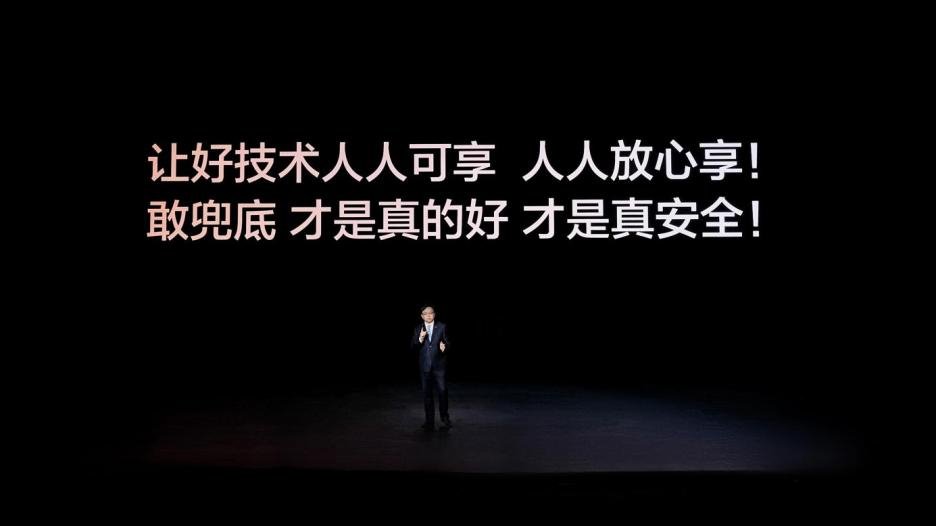
Currently, intelligent driving is accelerating, but ambiguous rights and responsibilities and risk shifting have become common pain points in the industry. Most brands offer paid intelligent driving insurance, which seems to address users' concerns, but carries risks such as paying out of pocket, capped compensation, and claims raising the car owner's premiums. BYD is the first to implement official backing for both urban navigation and intelligent parking scenarios, setting a safety responsibility benchmark for the industry with a commitment to directly bear risks as an automaker.
There is a fundamental difference between BYD's backing and intelligent driving insurance on the market. Intelligent driving insurance is a third-party commercial financial product. Car owners must pay an additional annual fee, compensation is subject to a cap, and the difference for large accidents must be borne by the car owner. Claim records are also included in the car owner's personal insurance file, directly driving up the next year's auto insurance premium. Intelligent driving insurance currently on the market essentially only compensates for the difference in car insurance price increases after a claim, and cannot cover economic losses such as vehicle damage and personal injury from the accident itself.
In contrast, BYD's backing is protection included with vehicle purchase, with zero additional cost throughout. For accidents determined to be caused by the intelligent driving system, vehicle repairs, third-party property, and personal injury losses are fully compensated with no compensation cap; liability for the accident belongs to the automaker, does not go through the car owner's personal auto insurance, will not leave a claim record, and the next year's premium is not affected in any way.
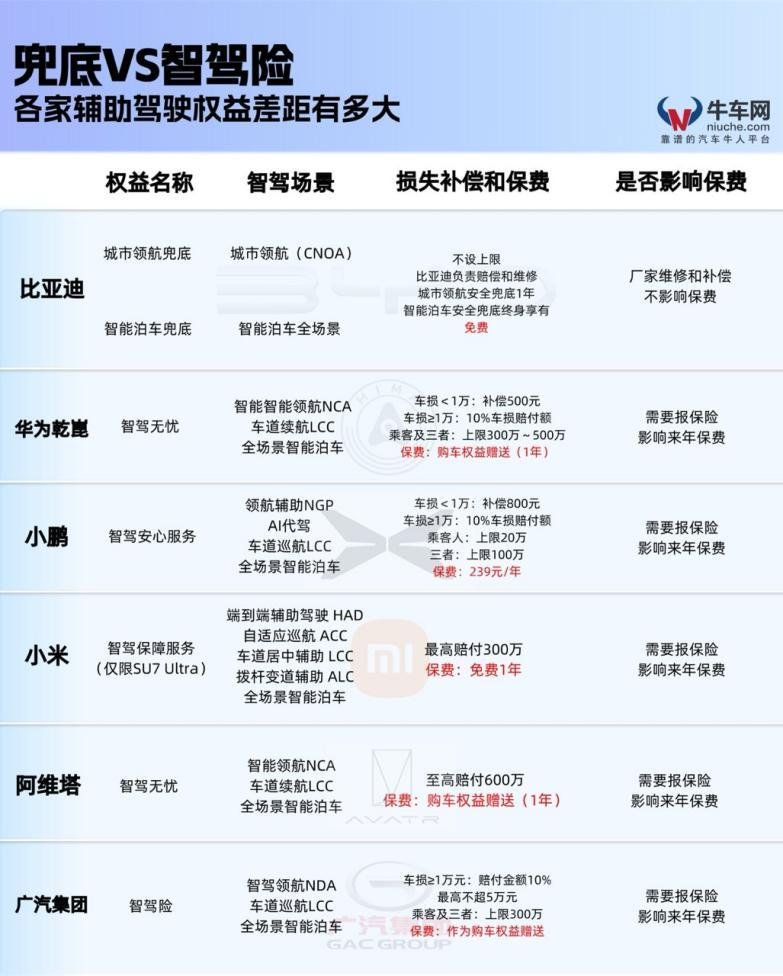
Industry analysis says that long-term reliance on intelligent driving insurance to shift risks will suppress users' willingness to use advanced intelligent driving and hinder technological iteration and market adoption. BYD's backing breaks out of the involution over hardware parameters and guides the industry toward dual-core competition of "technical strength + responsibility taking." Automakers actively bearing the risks of intelligent driving systems greatly increases users' enthusiasm for enabling urban navigation and intelligent parking. Massive real-world road data in turn optimizes algorithms, forming a positive cycle of "users use it with confidence - data iterates technology - safety continuously upgrades."
As a representative of Chinese automobiles, BYD relies on its fully self-developed God's Eye intelligent driving system, a huge base of intelligent driving models, and hundreds of billions in intelligentization R&D investment, giving it the technical confidence to shoulder safety backing. In the future, it is hoped that more automakers will follow up with intelligent driving backing responsibility commitments, clarify the boundaries of rights and responsibilities in intelligent driving accidents, abandon the short-term model of risk shifting, and jointly establish unified, inclusive intelligent driving safety assurance standards to promote the high-quality and sustainable development of China's intelligent driving industry.


