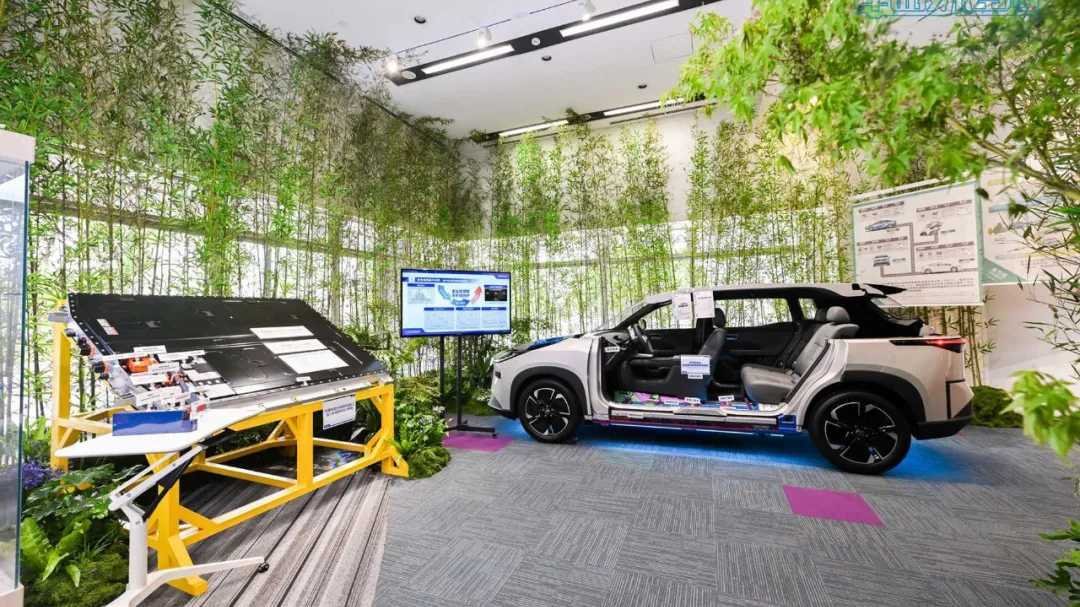
The 2025 Toyota Technical Space arrived as scheduled, and this time the event was held at Toyota's Intelligent Electric Vehicle R&D Center (China) in Changshu, Jiangsu. A full day of visits and test drives produced an enormous amount of information. Let's take a look at the highlights from the scene.
Safety-First Intelligent Driving
Let's start with safety. According to statistics from the World Health Organization, more than 1 million people worldwide lose their precious lives in traffic accidents every year. In order to achieve the goal of zero traffic fatalities, Toyota has always been committed to the pursuit of safety and the development of safety technologies. It conducts multidimensional analysis of traffic accidents worldwide, and also conducts accident analysis for segmented markets including China and Japan. Toyota Pilot intelligent driving assistance offers 26 functions covering all scenarios, from entry-level models to flagship vehicles across all categories. It is not about showing off technology, but about giving you a reliable and complete sense of reassurance.
We experienced Toyota's advanced intelligent driving. Compared with the new forces on the market, Toyota's system is clearly premised on ensuring safety. When facing a scenario on an expressway where the vehicle merges into the main road and a vehicle on the main road forcibly cuts in, the test vehicle first avoided smoothly and then merged, a handling approach that both ensured safety and improved traffic efficiency. In the scenario of a pedestrian suddenly darting out, Toyota's AEB performed very adeptly. At a speed of 40 km/h, it could completely stop when encountering a pedestrian suddenly darting out, and at 60 km/h it could reduce speed to the greatest extent to minimize loss to traffic participants.
Toyota Also Excels at Creating Characterful Cars
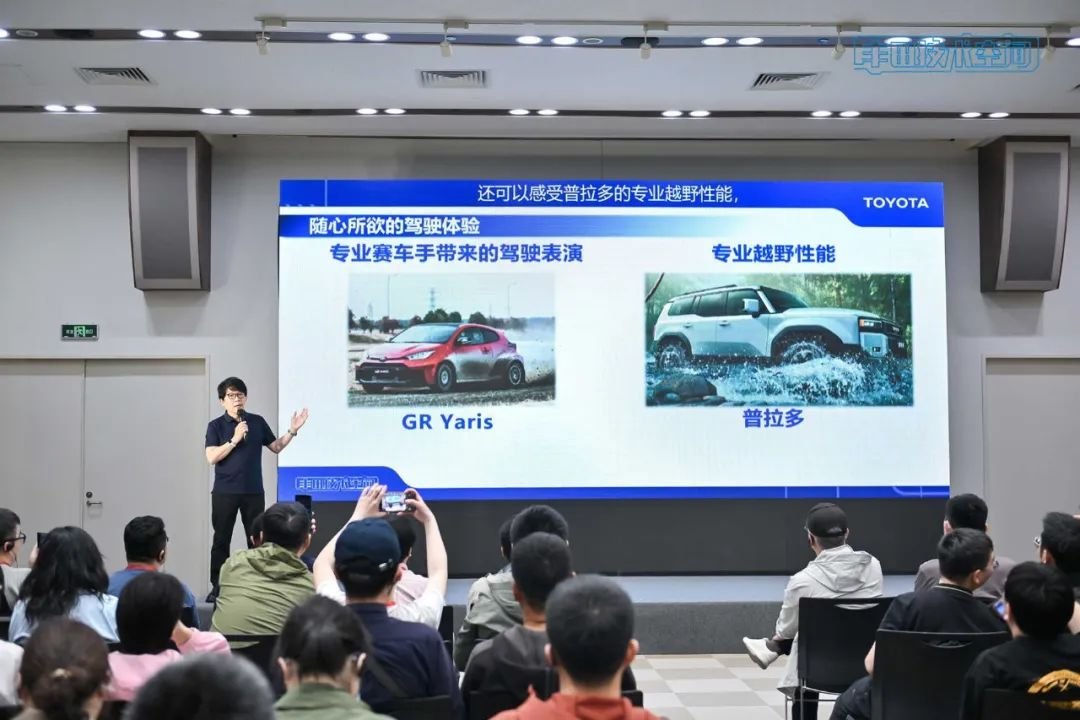
The GR Yaris and Prado were the stars of this event's test rides and test drives. The GR YARIS is a representative model of the GR brand. Supported by the development philosophy of "Thank you for breaking it," it explores and breaks through vehicle limits in extreme environments such as circuit racing and rally racing, continuously discovering problems and making continuous improvements, ultimately achieving the evolution and upgrade of the GR YARIS. The GR YARIS we test-rode this time has a newly developed frame and a full powertrain setup, including a 1.6T turbocharged three-cylinder engine, a 6-speed manual transmission, the GR-FOUR all-wheel-drive system, and well-proven suspension technology and tuning experience. Although it was only a short one-lap experience, speeding across this kind of gravel road, what the GR YARIS's powerful performance brought was not tension, but endless joy!
The subsequent professional off-road performance experience with the Prado gave me a completely new understanding of hardcore off-roading. The all-new Prado innovated the traditional H-shaped frame that provides sturdy support for the vehicle skeleton. According to different positions of the frame, materials are applied according to local needs, using ultra-high-strength steel plates to ensure excellent ruggedness and high rigidity. It improves the vehicle's driving performance and safety performance under both off-road and on-road conditions. The Prado is equipped with two Torsen LSD differentials, offering superior performance and more composure when dealing with complex road conditions. After activating Crawl Control, the stability of traversal is comprehensively improved, adding the confidence of steady progress to a worry-free journey.
Mobility for All
What left the deepest impression at this event was the experience with welfare vehicles. Toyota created China's first pure electric welfare converted vehicle with a rotating front passenger seat that passed safety testing and obtained official announcement, and the welfare vehicle based on the bZ3 has brought the price to under 200,000, allowing more users in need to enjoy welfare services. Toyota hopes to provide more "customized" products and services for different users, meeting each user's travel needs.
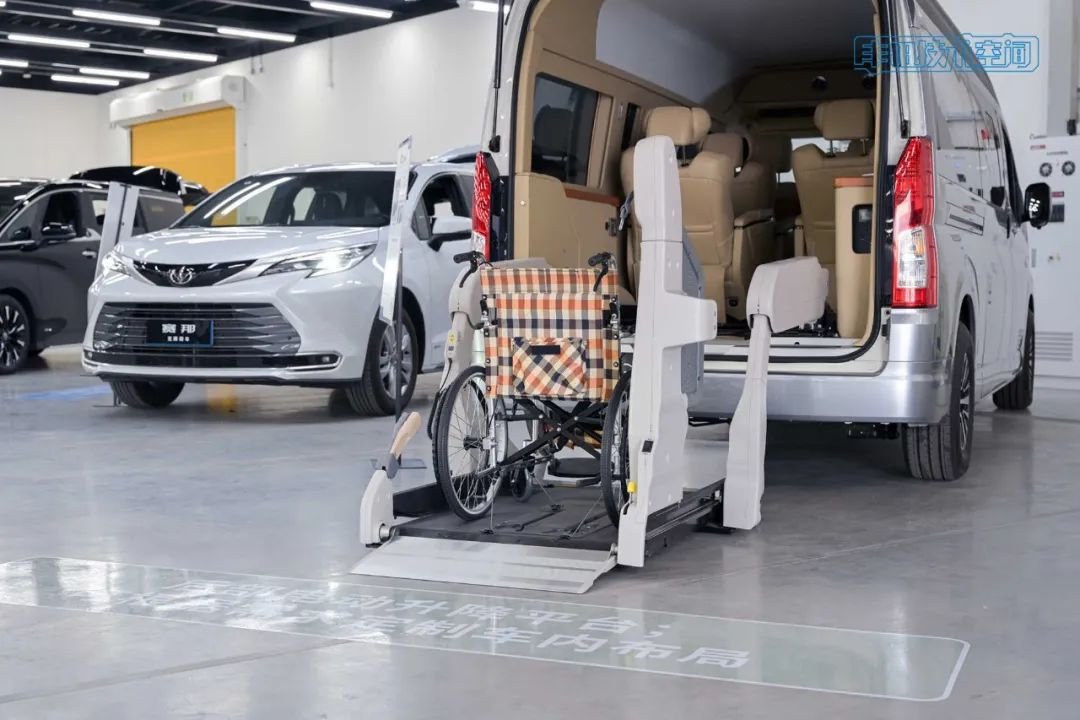
In addition to providing welfare products, Toyota, based on listening to everyone's opinions, gradually launched welfare vehicle leasing services in Beijing starting in May 2024, in Guangzhou, Chengdu, and Suzhou starting in July, and in Hainan and other places in August, and is discussing ride-hailing service models with online ride-hailing operation platforms. At the same time, the new pure electric bZ3 welfare model will also be introduced into leasing services in the near future. Toyota will also continue to explore more diverse service models, for example, it is currently discussing providing accompanied medical visit services for the medical needs of elderly people, 90% of whom age at home. Toyota hopes to make full use of its diverse welfare vehicle models and abundant rehabilitation equipment and assistive devices, cooperate with major elderly care institutions, and provide a health express directly to elderly people and friends with disabilities who have rehabilitation and medical needs, that is, door-to-door one-stop service. At the same time, it will connect with day care centers active in various communities across the country to provide a day care pickup and drop-off service model for elderly groups who have difficulty leaving home and integrating into social life because their children cannot pick them up or drop them off, allowing elderly people to easily and happily enjoy their later years.
Low-Carbon "Toyota" Presence
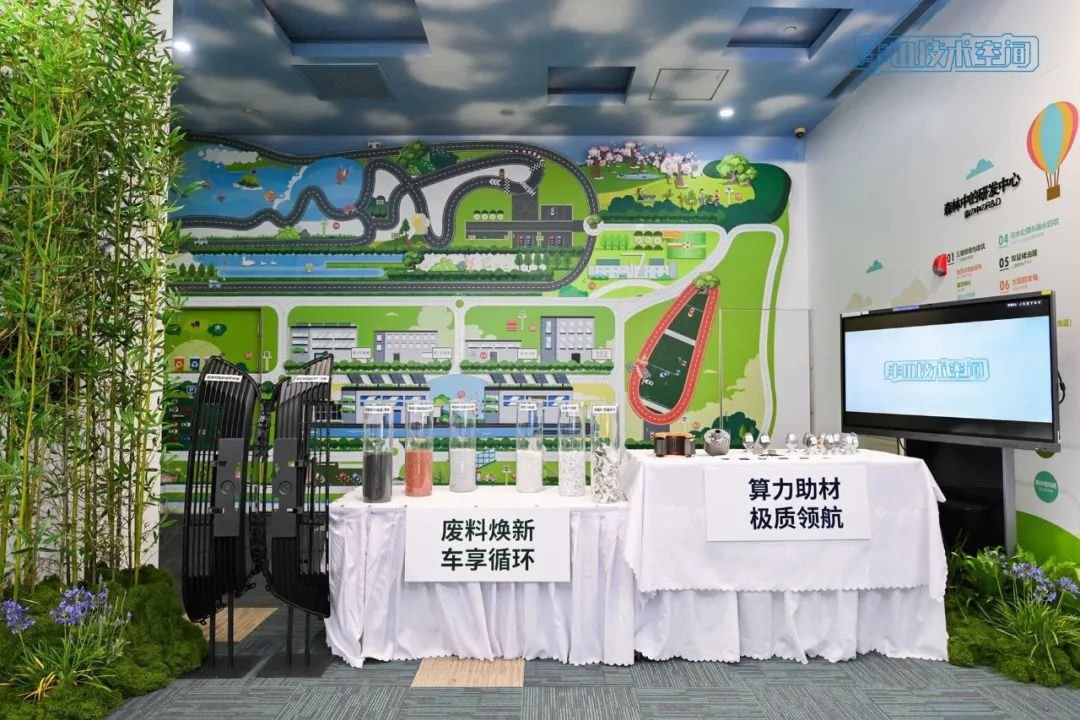
Each country and region has different energy conditions and living environments, so Toyota insists on achieving carbon neutrality through multi-path new energy technologies. In terms of mass-produced vehicles, Toyota provides diversified powertrain choices to promote the realization of carbon neutrality in China. Regarding pure electric models, Toyota will continue to expand the bZ series product lineup and will successively launch competitive range-extender vehicles and plug-in hybrid vehicles in the future. In terms of factory carbon neutrality, current data shows that energy use in 2024 was reduced by 27% compared with 2019, and it is expected to achieve carbon neutrality across all factories by 2035.
Increasing Localization Efforts
During the event, Yoshiki Konishi, general manager of Toyota Intelligent Electric Vehicle R&D Center (China) Co., Ltd., introduced local independent R&D. First, establish a China ONE R&D system, integrate China R&D that was originally scattered, and actively appoint Chinese engineers to strengthen the R&D system.
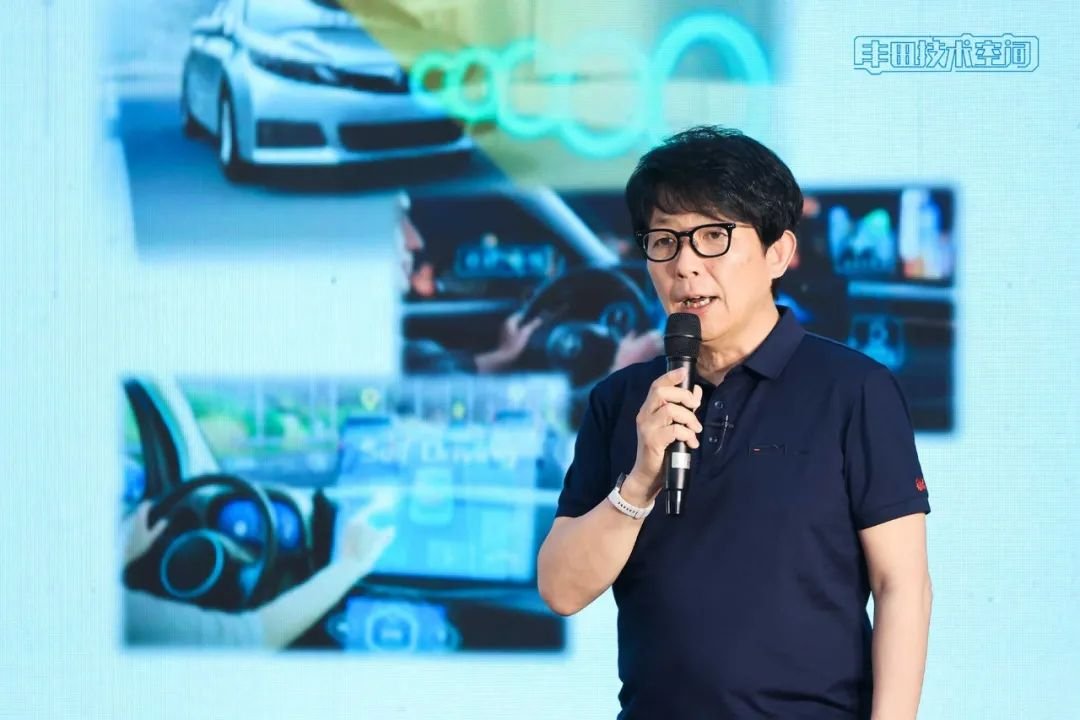
Next is to promote the RCE (Regional Chief Engineer, China Chief Engineer) plan in China, starting from product definition authority and gradually handing over R&D leadership to the local team. The bZ series, the Bozhi series, and even global models such as Corolla, Camry, and Sienna will all be led by Chinese engineers. RCE is not only involved in R&D, but must also continuously respond to market feedback and assume responsibility for iterative optimization.
The third point is to strengthen cooperation with Chinese partners and local suppliers. Further strengthen cooperation with partners such as FAW, GAC, and BYD, implement structural reforms, and enhance product competitiveness and accelerate R&D speed. In addition, Toyota will also adjust procurement policies with important suppliers, increase joint R&D efforts, and manufacture products that adopt the world's most advanced technologies.
Toyota must base itself on the globe and advance true localization. The core is to "put Chinese Toyota people who better understand Chinese consumers in positions where they can make decisions, promote the development of China's business in the era of intelligent electrification, and then feed the results back to the world. China remains one of Toyota's most important markets.


