At the corner of the city, there is also room for a boxy off-roader.
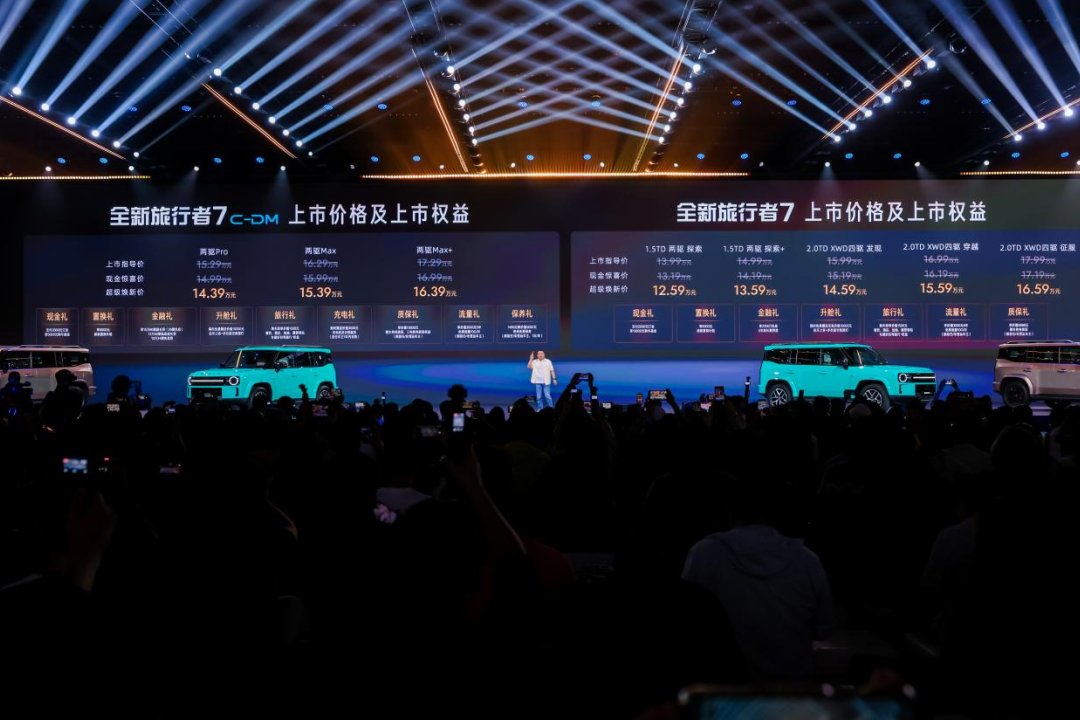
On October 14, Jetour held a global launch in Beijing for the all-new Traveler 7 and Traveler 7 C-DM. The keynote of the event was "city-capable, off-road-capable, travel-capable," but we can also translate that into plain language: the gasoline version starts at 125,900 yuan, the hybrid version starts at 143,900 yuan, and advanced smart driving has been packed into both powertrain lines at the same time.
This time, Jetour is not doing a simple facelift, but giving the boxy off-roader a new set of competition rules.
Let's first get the pricing straight. When presales opened on September 23, the Traveler 7 was priced from 149,900 yuan; the launch "super renewal price" dropped directly to 125,900 yuan, equal to another 24,000 yuan cut right at the finish line. In the boxy off-roader segment, this pricing is no longer sincerity, it is attitude.
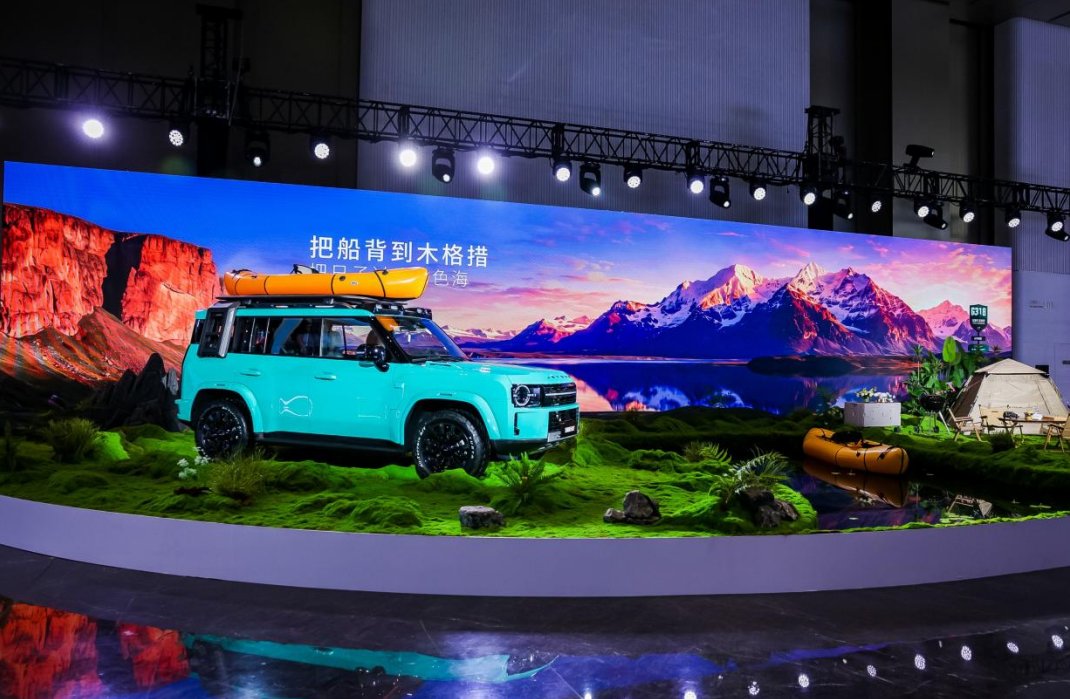
Jetour's background is no simple matter either. It proposed the "Travel+" strategy in 2018, and the Traveler went on sale in 2023, running into the "global champion of Chinese boxy off-roaders" in three years: from G318 to the desert Everest, from China to six major continents around the world, this vehicle's reputation was earned one unit at a time on complex roads. At the launch event, Qi Subin said, "The greatest pride of the Traveler over the past three years is having gained a group of like-minded friends around the world." Sales are the confidence, and also the敲门砖.
Now look at the broader context. The boxy off-roader segment only truly began to rise in 2023. By the first half of 2026, 42 models were already crowded together, selling 447,600 units, with multiple models each occupying their own hilltop, and the blue ocean had long since turned red. Jetour chose this moment to launch, holding these cards in hand: the Traveler series has a global cumulative total of 600,000 units, has exceeded 10,000 monthly sales for 31 consecutive months, and ranks first in boxy off-roader sales in 13 countries and regions.

125,900 yuan is not a price cut, it is the confidence bought by scale
The official guide price of the gasoline version is 139,900 to 179,900 yuan, with the renewal price starting at 125,900 yuan; the C-DM version is 152,900 to 172,900 yuan, with the renewal price starting at 143,900 yuan. The gasoline version comes with 7 major purchase benefits, and the hybrid version with 9 major benefits, covering cash, trade-in, and finance, with a total value of up to 40,000 and 50,000 yuan. The essence of a price war is a cost war. What the 600,000-unit ownership base dilutes is not only supply chain costs, but also the marginal costs of the "Travel+" system.
When others cut prices, it is a stress response; when Jetour cuts prices, it is a proactive attack—this is the posture only a global sales champion has. Placed in this price range, the 125,900 yuan boxy off-roader has already disrupted the pricing logic of the Haval Raptor, Deepal G318, and their peers.
The truly sharp blade is "equal intelligence for gasoline and electric"
For most boxy off-roaders on the market, intelligence is exclusive to the new energy versions, while the gasoline versions honestly stick to mechanical qualities.
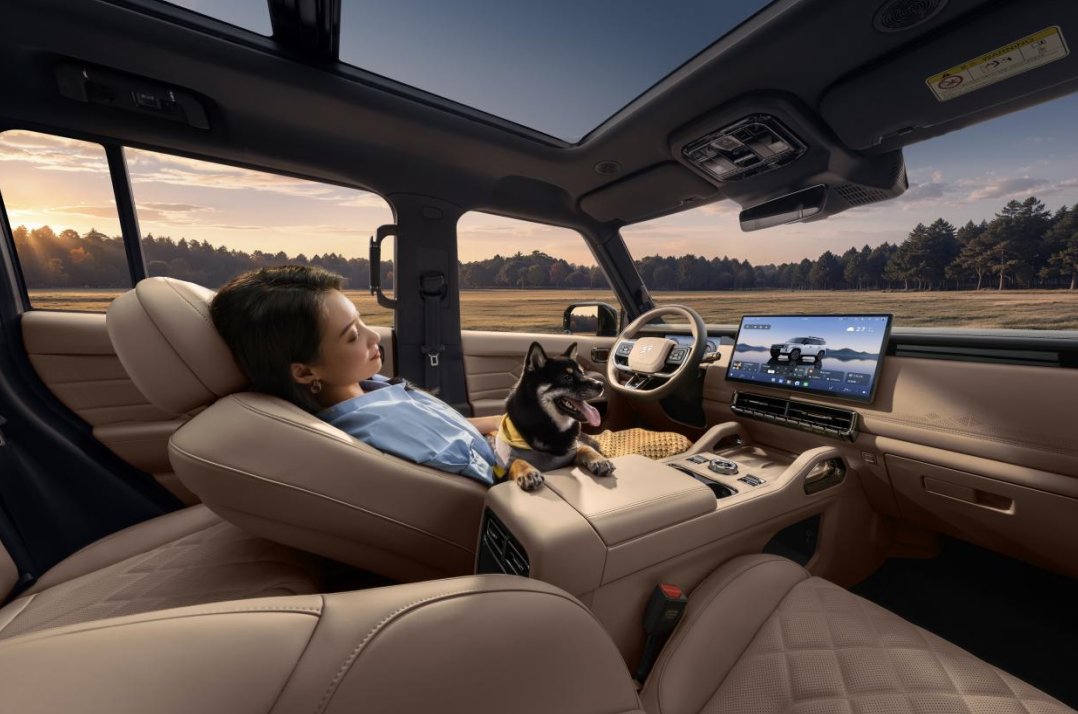
The Traveler 7 does not do that: the gasoline version is equipped with Falcon 500 advanced smart driving, offering highway NOA and full-scenario parking; the C-DM version goes directly to Huawei Qiankun ADS 5, with 27 high-precision sensors, and also uses a co-optical-path in-cabin lidar—the radar is hidden inside the cabin, avoiding a roof "horn" that would ruin the boxy off-roader's shape. This engineering detail deserves a separate round of applause. Inside the cabin, the Lingxi smart cockpit, composed of the Snapdragon 8255 chip, 24GB RAM, a 15.6-inch 2.5K giant screen, and the iFlytek Spark large model, supports continuous commands and free split-screen, waking up on entry and starting the journey with one sentence. For people stuck in morning and evening rush hour traffic every day, this system completely overturns the old impression that "off-road vehicles equal outdated infotainment." After boxy off-roaders competed on styling and then on four-wheel drive, Jetour has directly pulled the smart driving track of new forces into its own home turf.
C-DM tears up the words "off-roading is fuel-thirsty"
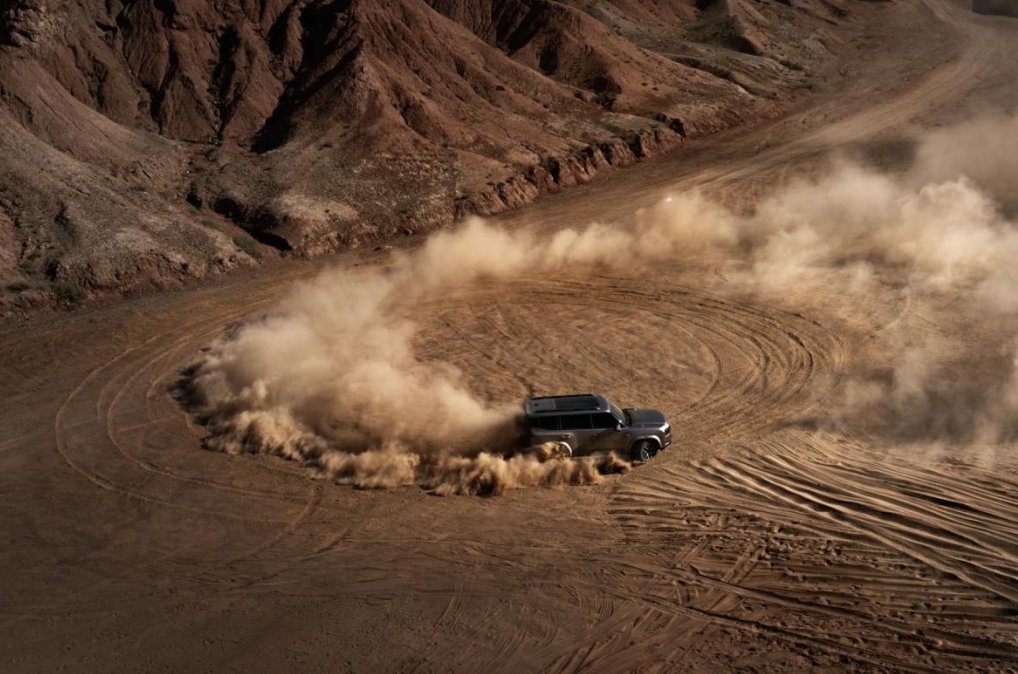
Tri-motor true four-wheel drive, combined power 575kW, torque 835N·m, equipped with XWD fully automatic intelligent four-wheel drive and an intelligent torque manager, identifying road conditions in seconds, with deserts and mountain roads all part of its script; a 45.12kWh CATL battery, 251km of pure electric range, 1,400km of combined range, and fuel consumption as low as 1.08L/100km when depleted.
The Equation Leopards proved that people will pay for plug-in hybrid off-roaders, and Jetour has now pulled the threshold down to the 150,000 yuan class—poetry and distant places are no longer toys for the few, but daily life that most people can set off for on weekends. Add in an 81% high-strength steel cage body, an integrated embedded ladder frame, and the industry's only lifetime vehicle warranty, and it wants you to go wild with peace of mind, and also affordably.
From the Traveler to the Traveler 7, Jetour has been doing the same thing all along: lowering both the threshold and the cost of "going wild."
Travel-capable means competing on space, and even more on ecosystem
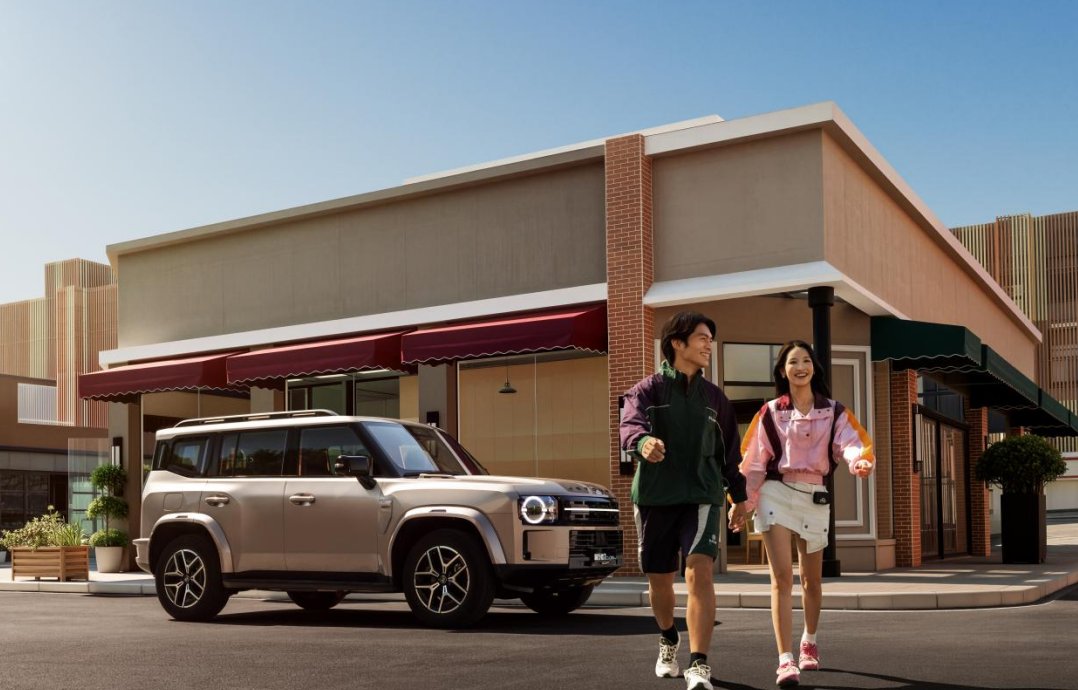
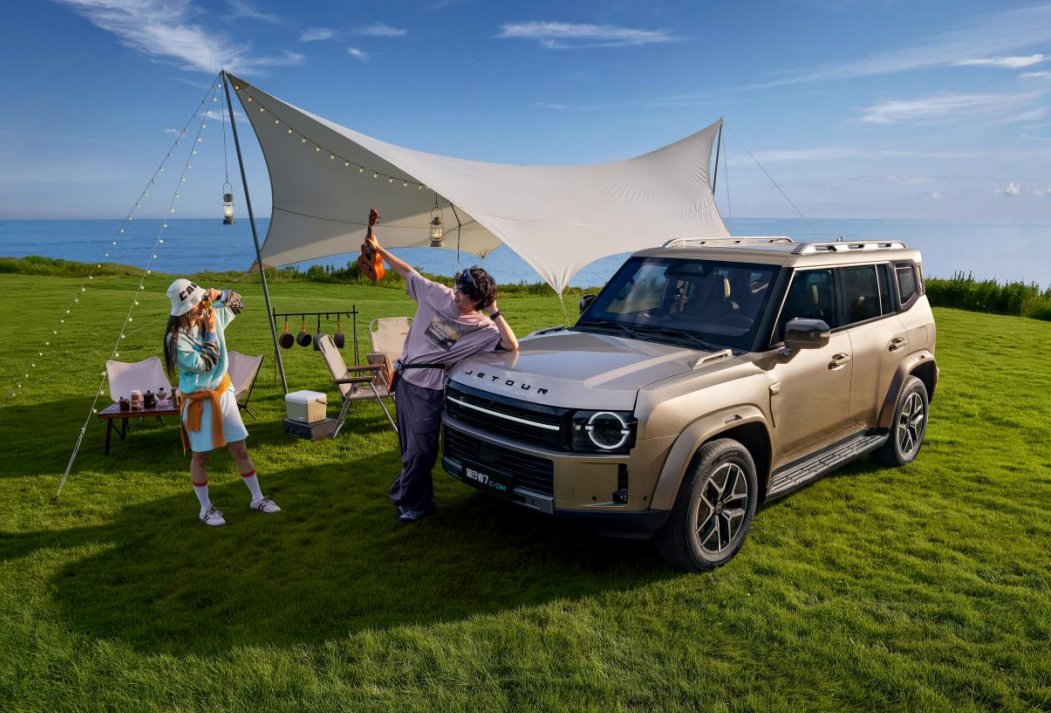
The classic boxy off-roader styling is paired with the "way of square and circle" design, circular light clusters, a horizon light strip, a raised hood with body-color wide fender flares, rugged yet refined. A 2800mm wheelbase, 580L trunk, second-row seats folded down into a 2-meter large bed, and 73 storage spaces; 12-layer structure Shuyun seats with heating, ventilation, and SPA-level massage, plus a 64-inch panoramic sunroof, 256-color ambient lighting, 80% soft leather wrapping, and a 23-speaker audio system. The cabin of a rugged vehicle can also deliver a sense of luxury, and long trips are no longer suffering. More importantly, the "Travel+" ecosystem: 10,000+ accessories, 600+ benefits, and 3,000+ service stations. When the shells of boxy off-roaders look more and more alike, what determines the moat is whether someone has arranged the life after buying the car for you.
How to choose: gasoline version or C-DM version
If you are budget-sensitive, mainly commute, and occasionally do light off-roading, choose the gasoline version, starting at 125,900 yuan, with 2.0T Kunpeng power at 187kW on tap whenever you press the pedal, and Falcon 500 is already enough; if you often drive long distances, like camping, and charging is convenient, choose the C-DM version, starting at 143,900 yuan, with Huawei ADS 5 plus 1,400km of range, and the experience upgrade bought by the price difference is very worthwhile. Neither is better than the other, only more suitable. Two reminders: the renewal price usually requires stacking trade-in, finance, and other benefits, so the final price should be calculated according to the specific plan; the urban smart driving level of ADS 5 still needs OTA updates and real-world testing to verify.
To judge whether a boxy off-roader is worth buying, do not just ask whether it "can go wild." Look at three things: whether the price is bought by scale, whether the intelligence has truly reached a new level, and whether the ecosystem is truly being built. The Traveler 7 has given clear answers on all three. As for whether it can continue to sit firmly as the global boxy off-roader sales champion, the rest is left to the market and time.
Finally, a plain truth: in recent years, boxy off-roaders have never lacked traffic; what they lack is cars that turn "good-looking" into "good to drive, good to use, and good to maintain." What the Traveler 7 wants to prove is exactly the latter. Whether it can do so, we will see in the next real-world test video.


