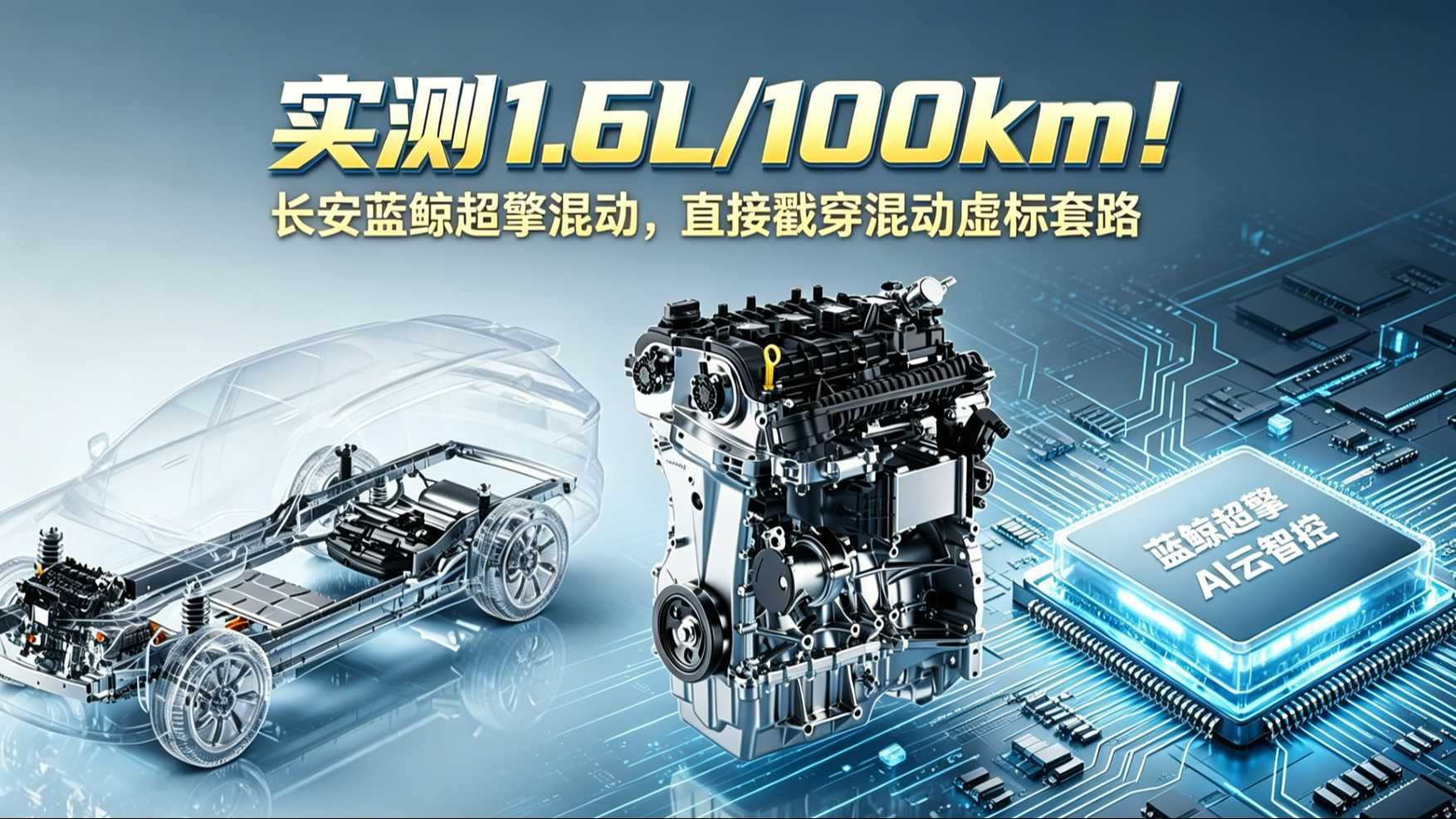
In 2026, the hybrid car market has been rolled into a tangled mess, with every brand stacking specs and showing off PPTs, each shouting louder than the last about high thermal efficiency and ultra-low fuel consumption. But what do ordinary people actually want when buying a car? Don't we just want something real? Nobody wants to spend over a hundred thousand yuan and buy a "dad" that saves fuel in the lab but guzzles gas on the road.
Until March 30, when Changan released the Blue Whale Super Core Hybrid, and then over the following week, I looked through real road tests from media and car owners, and I had only one feeling: this time, the hybrid world finally has something that isn't playing games.
Don't look at the ads, look at the results. How was the 1.6L fuel consumption achieved?
Don't rush to criticize. I know everyone has been burned by "happy meters" and is scared of them. The official figures previously given were: blue-plate sedan 2.98L in urban areas, SUV 3.98L in urban areas. To be honest, when I first saw these numbers, I also wondered whether this was another set of extreme data that only a "golden right foot" could achieve.
The actual test results slapped that prejudice right in the face!
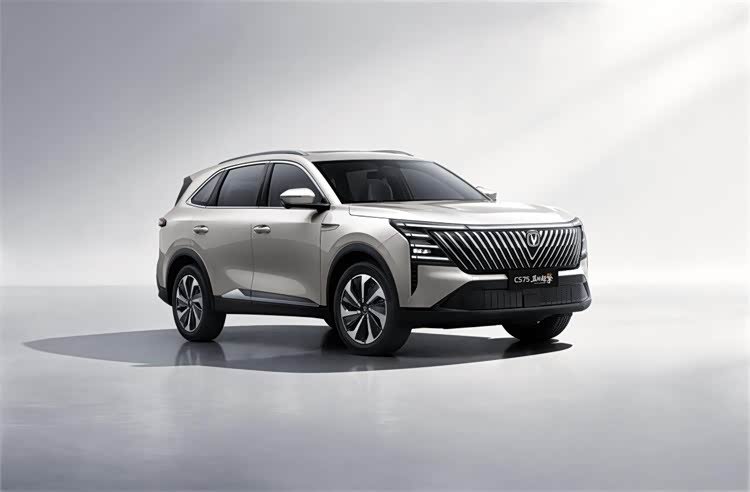
Recently, several media outlets got their hands on the fourth-generation Eado and CS75PLUS Blue Whale Super Core versions for real testing, and they actually achieved 1.6L/100km! Note, this was not constant-speed cruising on a closed track, but driving during our daily rush-hour traffic jams, starting from traffic lights, occasionally fully loaded, with the AC running freely. There was even a car owner in Chongqing who drove this car up the mountain city's steep slopes and got just 2.1L.
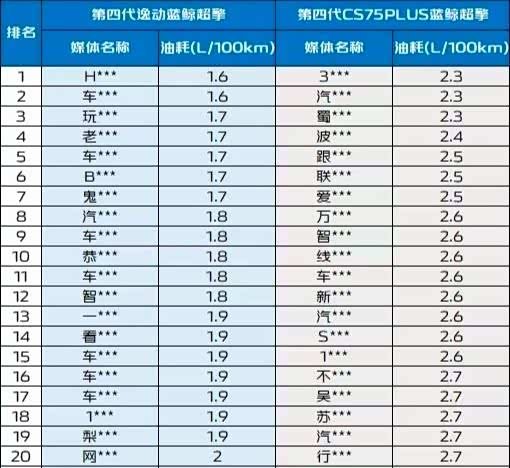
The real-world test came in lower than the official data. That kind of authenticity—few automakers dare to play it this way now.
When choosing a hybrid, don't step into these three "pits"
There are so many hybrids on the market now that many salespeople have worn their lips raw talking. Based on Changan Blue Whale Super Core's performance this time, let me give friends who are thinking about buying a car a reminder: step into any one of these three misconceptions, and your wallet will suffer:
Misconception one: only looking at official fuel consumption, not real-world tests
The fuel consumption many automakers advertise is measured under ideal conditions: constant temperature, no wind, flat roads. How many of us have such good fortune in daily driving? The toughest part about Changan this time is that the cars were sent directly to 4S stores, and media and owners could test them however they wanted. Daring to let you measure a 1.6L figure—that's real fuel saving, not "PPT fuel saving."
Misconception two: blindly chasing "peak thermal efficiency" while ignoring the high-efficiency range
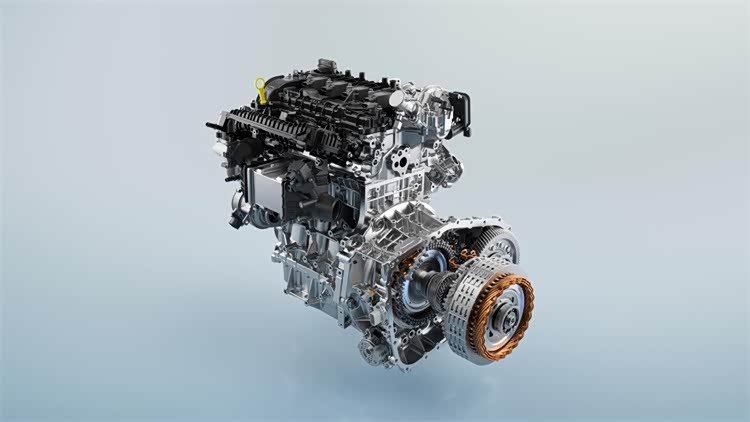
Now every automaker shouts "45% thermal efficiency." Sounds impressive, but think about it: if the engine can only reach that efficiency for an instant at 4,000 rpm and you can't use it in normal driving, what's the point? What Changan Blue Whale Super Core is doing this time is "full-domain high efficiency." Its high-efficiency range accounts for as much as 56.3%. Simply put, whether you're crawling in traffic or cruising on the highway, the engine is working in its most fuel-efficient state most of the time, and not a drop of fuel is wasted.
Misconception three: don't be fooled by PPT promises—only actual cars in showrooms are reliable:
Don't be fooled by PPT promises—only actual cars in showrooms are reliable: Some brands make their launches sound absolutely spectacular, but when you ask about available cars, it's either "wait a little longer" or "mass production next year"—pure pie in the sky. Changan Blue Whale Super Core Hybrid goes into mass production the moment it's launched. The fourth-generation Eado and CS75PLUS are already in stores, and hundreds of 4S stores nationwide offer test drives. Whether it saves fuel and whether it drives well—your foot and the fuel gauge won't lie.
The "hidden veteran driver" behind the fuel savings: Ai Cloud Intelligent Control
You may ask, how does Changan manage to save this much? Besides that 500Bar ultra-high-pressure direct injection engine, the key contributor is this—Ai Cloud Intelligent Control backing everything up, so you don't have to worry much
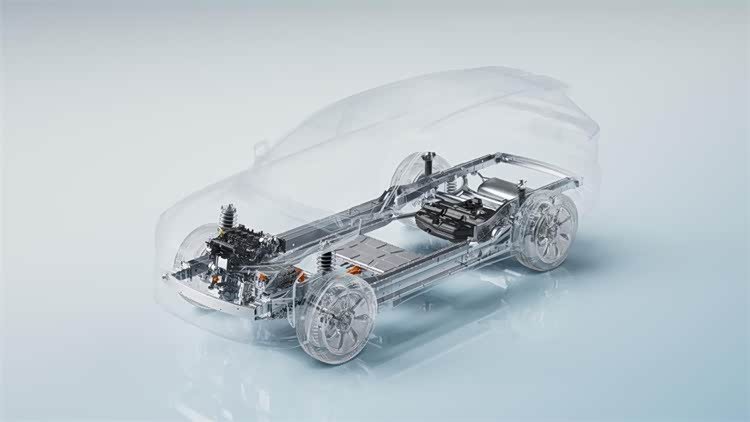
It can use cloud big data and AI algorithms to predict road conditions in advance: if there's traffic ahead, it lets the engine run in the high-efficiency range in advance to store enough electricity; when the traffic jam actually starts, it switches directly to motor drive. This alone can save another 5%~10% of fuel. And it can learn your driving habits: if you like to drive aggressively, it speeds up power response; if you drive calmly, it squeezes fuel consumption to the limit.

The biggest surprise is the quietness. With ANC active noise cancellation and PSC imperceptible start-stop, there is almost no vibration or noise when the engine intervenes. Sitting in the car is peaceful, and you don't need to manually switch modes the whole time—it arranges the optimal solution clearly on its own.
Final thoughts
For ordinary people like us, the needs when choosing a car are actually very simple: no need to charge, genuinely fuel-efficient, easy to drive and comfortable.
Before, I thought these three were hard to get all at once, but Changan Blue Whale Super Core Hybrid this time really shows sincerity. It isn't competing with us over inflated specs, isn't playing PPT car-making, and speaks only with real road-test data.
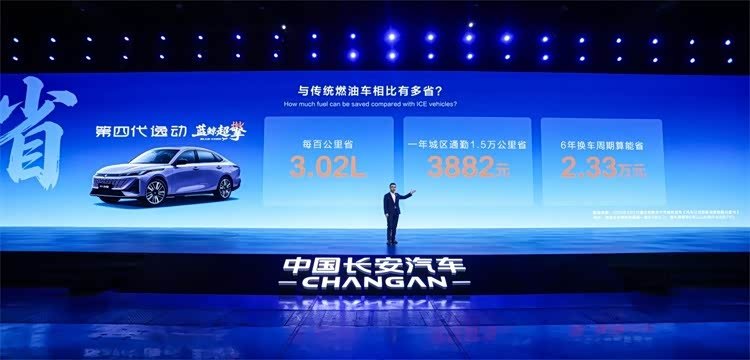
So here's a blunt piece of advice for friends who are still hesitating: don't just look at surface specs. Go for a test drive at a 4S store. The fuel consumption you achieve yourself—real ability—you'll know after one drive.


